Leadership is often tested in two very different situations: how we respond when people criticize us and how we respond when people need us. While reading Harold Myra and Marshall Shelley’s The Leadership Secrets of Billy Graham, these two areas stood out to me because they connect directly with what I am learning in my present leadership roles.
Billy Graham’s example reminds me that leadership is not simply about having influence. It is about developing the character necessary to handle that influence well.
Learning to Love Harsh Critics
One statement from the book especially challenged me:
“When criticism is a threat, a leader becomes defensive, but when it is viewed as a natural occurrence and a challenge, it can become a source of constructive energy.”
Criticism is unavoidable in leadership. The question is not whether people will criticize us, but what we will allow criticism to produce within us.
Throughout my ministerial journey, I have experienced criticism concerning my abilities, leadership, calling, and even character. I have learned that criticism does not have to determine my identity, but it can contribute to my development.
There have been people who did not believe I could go further in my calling. Instead of allowing those opinions to stop me, I have used them as motivation to pursue God more deeply and allow Him to have the final say concerning where He wants me to go.
Criticism concerning character requires an even different response. Rather than immediately becoming defensive, I have learned the importance of having conversations, listening to the concerns of others, and evaluating whether there are areas in my life that genuinely need improvement.
That does not mean every criticism is correct.
It means I want to be secure enough that criticism does not control me while remaining humble enough to learn when there is truth within it.
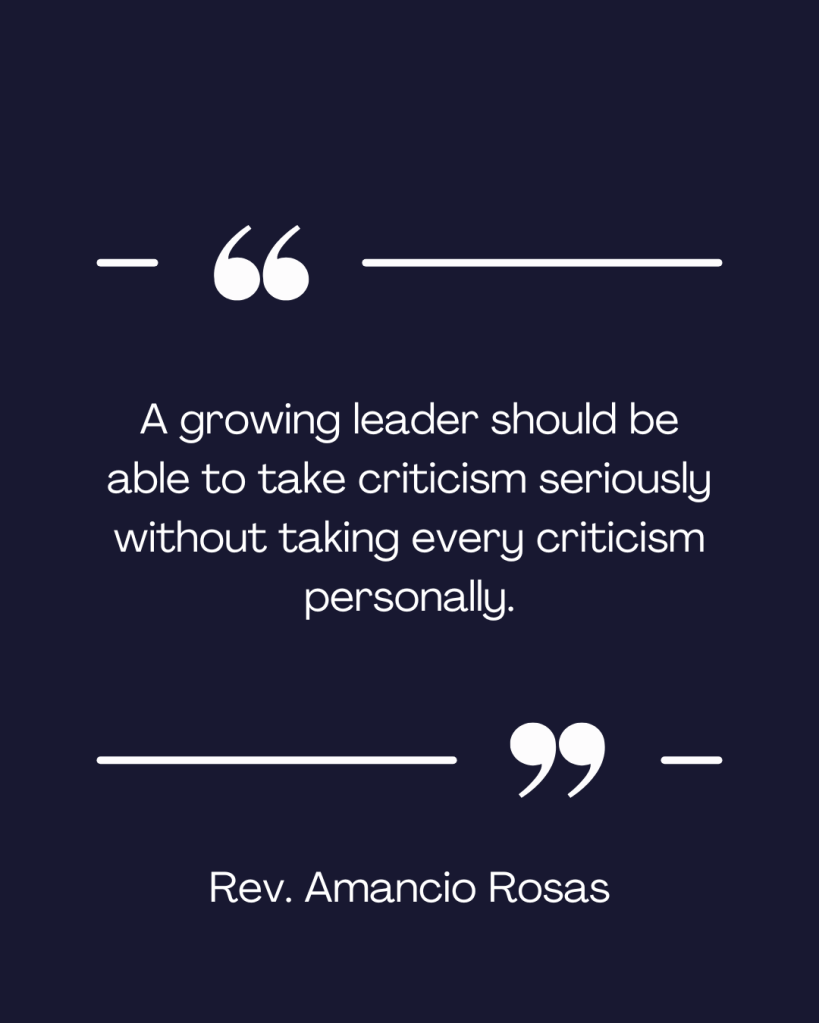
A growing leader should be able to take criticism seriously without taking every criticism personally.
Leading Through Love
Another lesson that resonated with me was Graham’s emphasis on leading through love. Myra and Shelley write:
“Sometimes love is shown by a thoughtful word, by willingness to help an employee in trouble or by refusal to retaliate when attacked; other times love is shown by simply showing up.”
This challenged me to think about leadership beyond positions, titles, and responsibilities.
Sometimes leadership is simply showing up.
In my current role working for a nonprofit youth organization, I have opportunities to mentor young people, but leadership also happens behind the scenes. I try to help with administrative responsibilities, complete smaller tasks that need attention, and assist my team when deadlines are approaching.
These actions may seem insignificant, but service can influence culture.
As I continued helping in these areas, my manager eventually began implementing rotations that encouraged other staff members to contribute in similar ways. What began as simply trying to help became an opportunity to influence how our team serves one another.
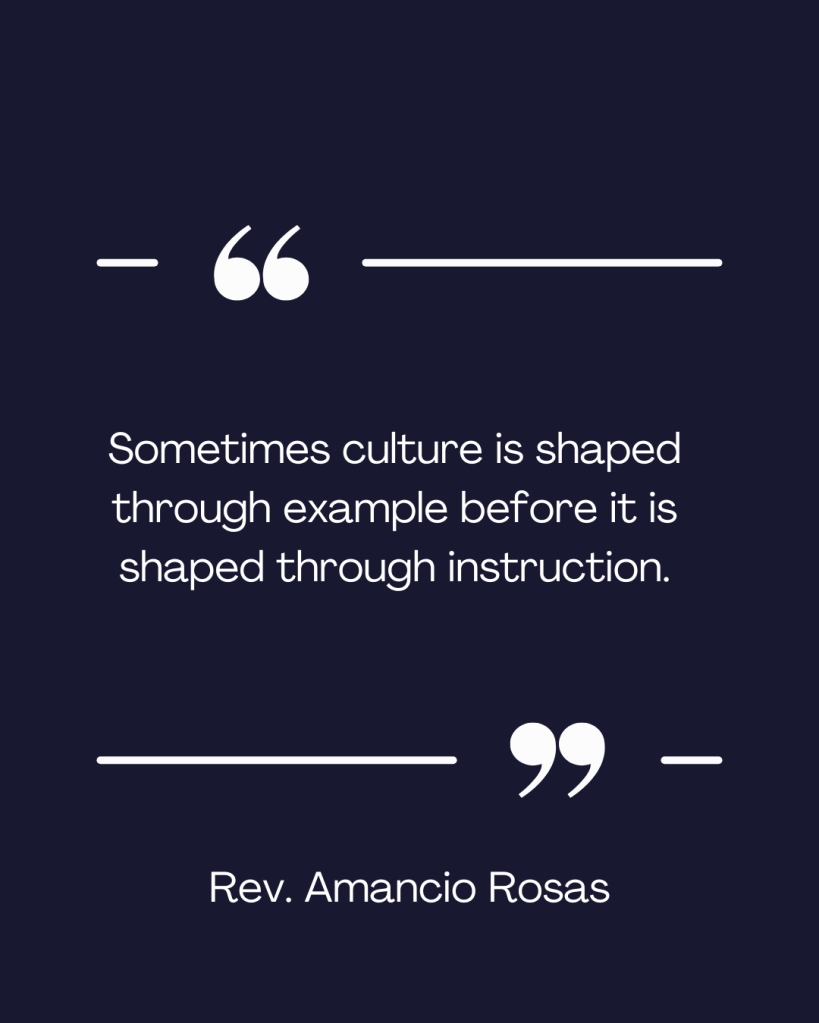
That experience reminded me that leadership culture is not shaped only through instructions. Sometimes culture is shaped through example.
Leadership Without Recognition
There is also an important distinction between serving others and using service as a way of gaining recognition.
Christian leadership cannot simply ask, What will make me look like a good leader?
Instead, we should ask, How can I genuinely help the people God has placed around me?
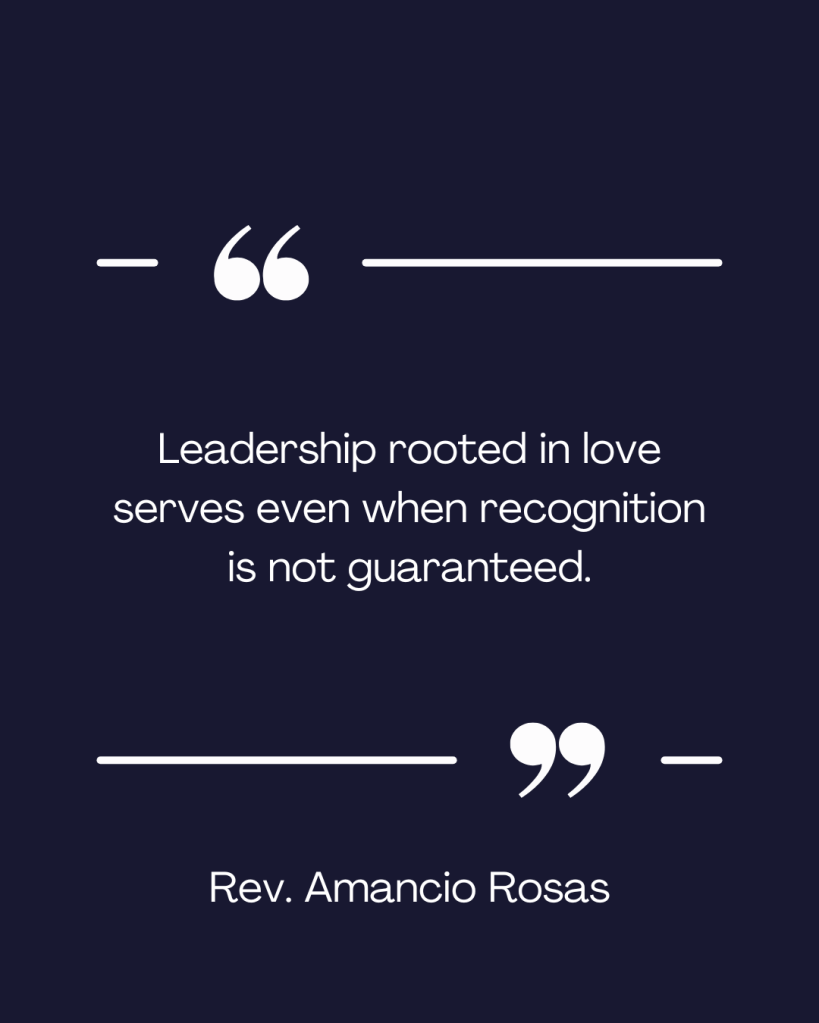
Jesus modeled leadership through service. Leadership rooted in love does not always need acknowledgment. Sometimes it means completing the unnoticed task, encouraging someone who is struggling, helping a coworker, mentoring a young person, or simply being present when someone needs support.
Our actions can communicate love before our leadership position ever does.
Becoming the Leader God Is Forming
These two lessons from Billy Graham complement each other.
Criticism develops something within the leader, while love expresses something through the leader.
Criticism can develop humility, self-awareness, perseverance, and maturity. Love then allows those qualities to become visible through service toward others.
I am continuing to learn that leadership development is not merely about becoming more influential. It is about becoming the kind of person who can steward influence faithfully.
I want to become a leader who can receive criticism without immediately becoming defensive, evaluate myself honestly, continue pursuing God’s calling despite opposition, and serve people without needing recognition.
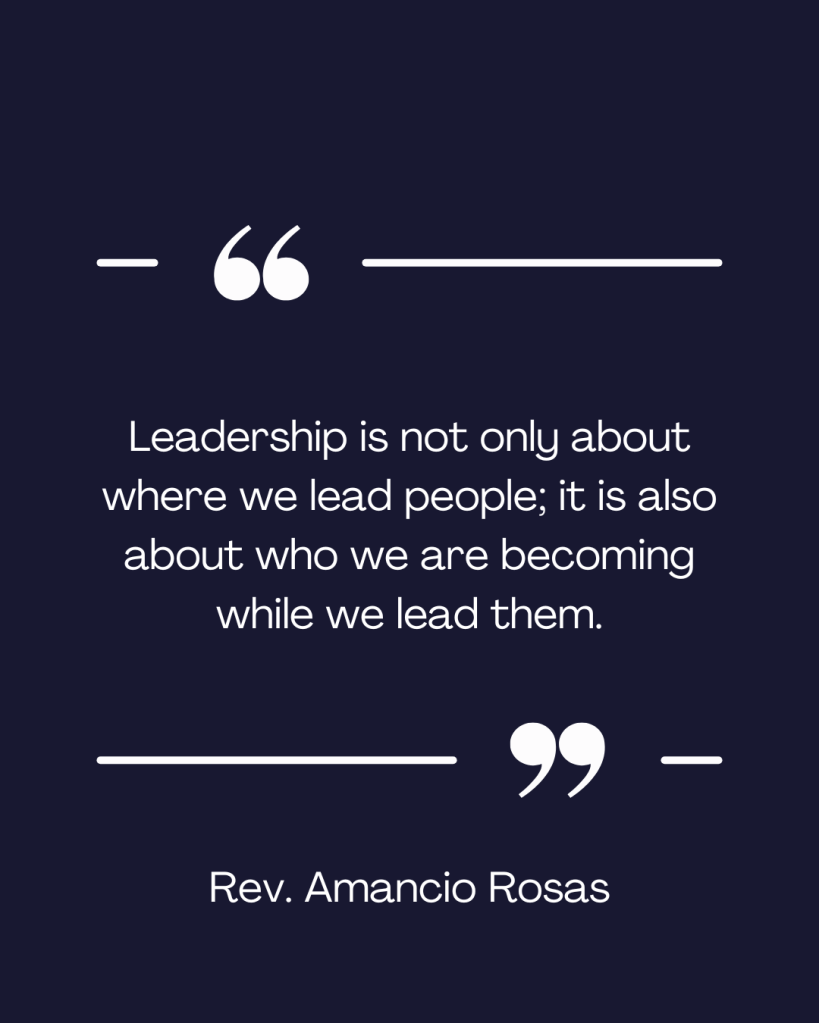
Ultimately, leadership is not only about where we lead people.
It is also about who we are becoming while we lead them.
Worship is easy to associate with what happens inside the church. We sing, pray, hear Scripture, give, and gather with other believers. Yet biblical worship consistently challenges us to consider what happens after we leave the sanctuary.
Does our worship change how we treat people?
Does our relationship with God shape how we respond to injustice?
And when people are overwhelmed by sin and guilt, are we willing to stand in the gap and pray for them?
The books of Amos and Ezra approach these questions from different circumstances, but together they reveal something important: worship should move us toward both people and God. We act with compassion toward others while interceding before God on their behalf.
When Worship and Justice Become Separated
During the time of Amos, Israel continued practicing religious rituals while injustice and oppression remained present within society. Their problem was not simply that they had abandoned religious activity. In many ways, they were still religious.
The problem was the separation between their worship and their treatment of others.
R. Alan Fuhr describes how Israel practiced the ritual worship required by the Mosaic law while simultaneously participating in social oppression and societal neglect. Their outward worship continued, but something was deeply wrong with the life surrounding it.
Israel could not separate devotion to God from righteous treatment of others.
That same principle should challenge Christians today.
We often emphasize having a “personal relationship with God,” and that relationship is essential. We also recognize our relationship with the Body of Christ. But biblical worship pushes us beyond ourselves. If we worship a God who is righteous, compassionate, merciful, and just, those characteristics should increasingly shape how we interact with the people around us.
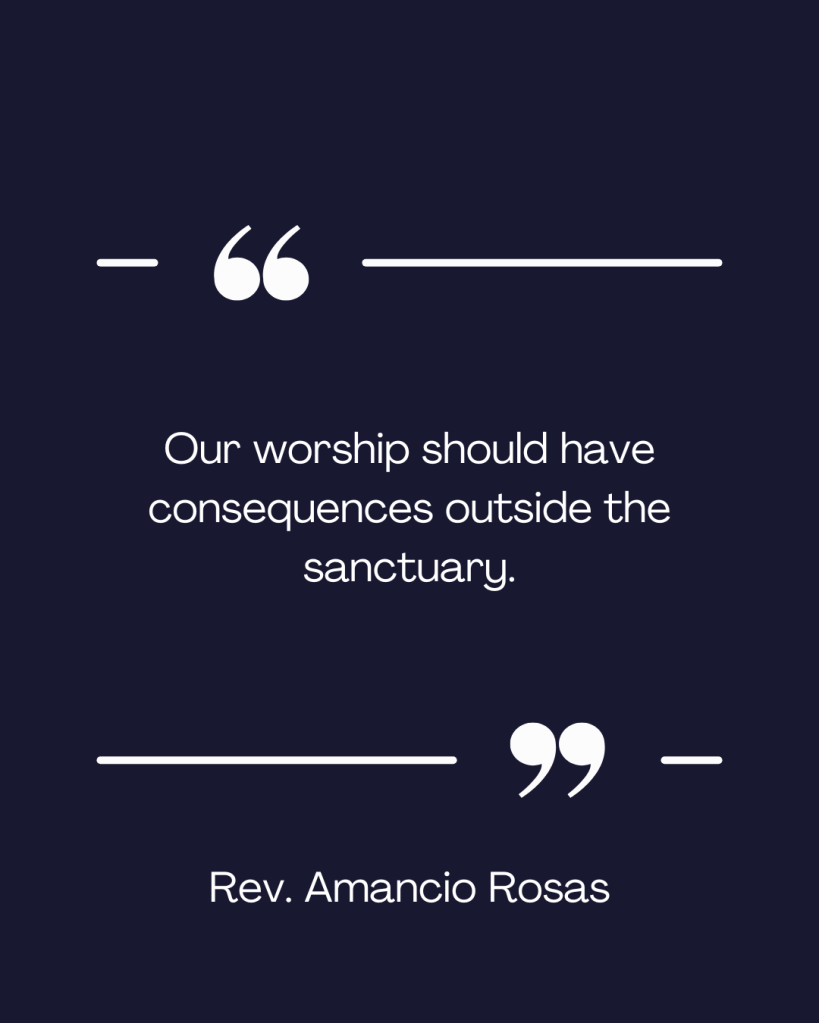
Our worship should have consequences outside the sanctuary.
More Than Choosing a Side
When injustice or oppression becomes visible, our first instinct can sometimes be to determine which “side” we are supposed to support.
But Christian faithfulness requires something deeper.
Our response cannot be reduced simply to voting, political affiliation, or participation in cultural arguments. Before asking which group we belong to, we should be asking what faithfulness to Christ requires of us.
Who is hurting?
Who is being overlooked?
Where is truth being ignored?
How can we love our neighbor while remaining faithful to God?
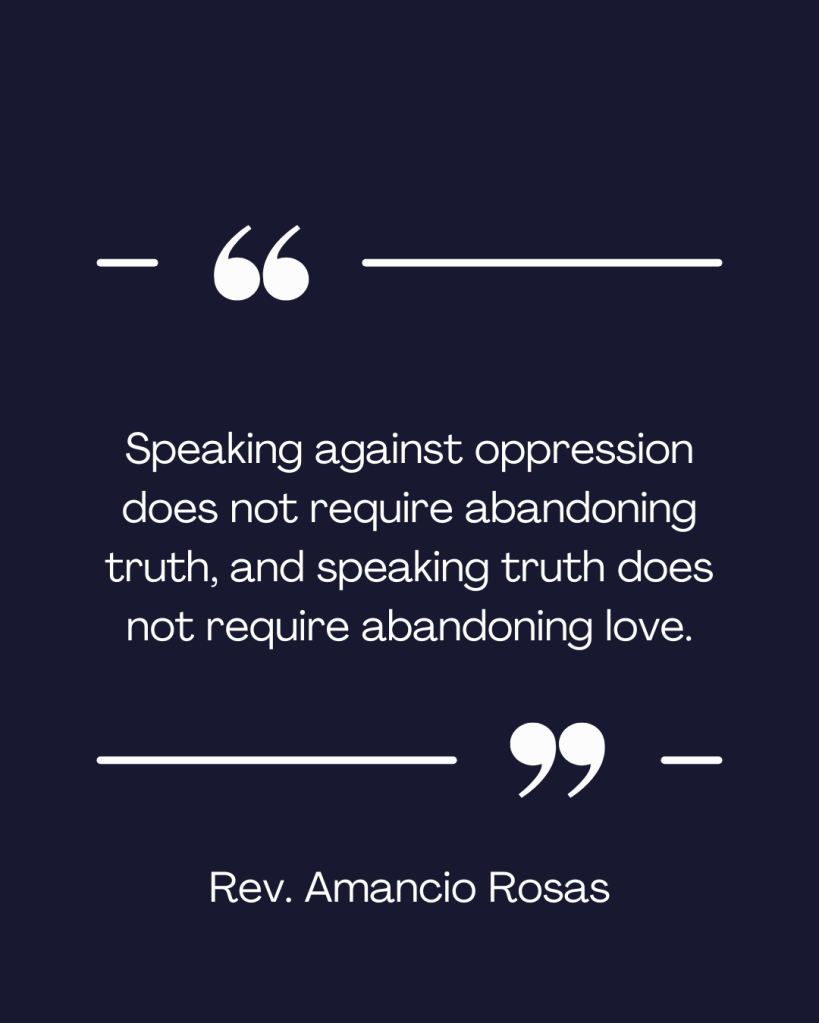
Speaking against oppression does not require abandoning truth, and speaking truth does not require abandoning love. Biblical worship should form believers who are capable of doing both.
If our lips declare the goodness of God on Sunday, our actions throughout the week should reflect the character of the God we worship.
When Guilt Builds Walls
Ezra introduces another dimension of worship: intercession.
After Israel survived exile, the people continued struggling with compromise and sin. Ezra felt the spiritual weight of what was happening among God’s people and responded through prayer.
Donna Petter makes an important observation about Ezra’s prayer: it calls upon God’s mercy to act.
There is an important tension here.
The people still needed to respond through repentance. Ezra’s prayer did not eliminate human responsibility. Yet Israel could not manufacture divine forgiveness for itself either. They needed the mercy and grace of God.
This has significant implications for pastoral ministry.
I have seen people become stuck in their faith because of their past. Even after change begins and forgiveness has been offered, guilt can remain.
The question becomes:
“Does God really love me even though I have sinned?”
When that question goes unanswered, guilt can slowly build walls.
When an Encounter Turns Into Guilt
I have seen a version of this in youth ministry.
A young person may come to church and genuinely encounter God. Then they disappear for several weeks. Eventually, the longer they stay away, the harder returning becomes.
What began as an encounter with God can become overshadowed by guilt.
They may think they have disappointed God. They may feel embarrassed about returning. They may convince themselves that they need to “get right” before coming back.
Those are moments when pastoral ministry requires more than asking, “Where have you been?”
Sometimes we need to stand in the gap.
Ezra reminds me of the importance of praying on behalf of the people God has entrusted to us. I have had opportunities to pray over young people and ask God to extend His mercy, restore their hearts, and help them experience the freedom they have in Christ.
Sometimes the person struggling to pray needs someone else praying for them.
That is part of the beauty of intercession.
Worship Moves in Two Directions
Amos and Ezra ultimately challenge me in complementary ways.
Amos pushes worship outward.
If I worship God, I should care about my neighbor. I should notice suffering, confront injustice with truth and love, and refuse to allow my Christianity to become merely ritualistic.
Ezra pushes worship upward.
When I see brokenness, sin, guilt, and spiritual struggle around me, I should bring those people before God. I cannot transform another person’s heart, but I can intercede for them and trust the mercy of God.
Together, these perspectives create a powerful picture of worship:
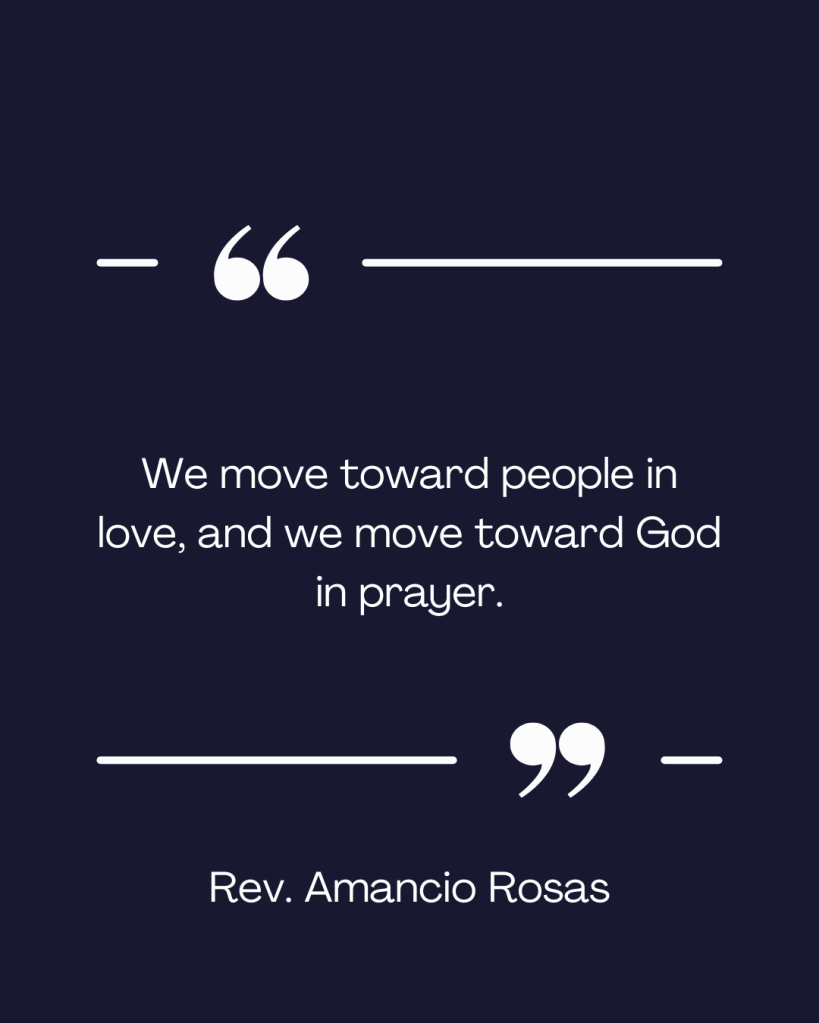
We move toward people in love, and we move toward God in prayer.
That challenges me personally because life does not become less busy as ministry responsibilities increase. If anything, busyness makes intentional intercession more difficult.
But perhaps that is exactly why it must become a discipline.
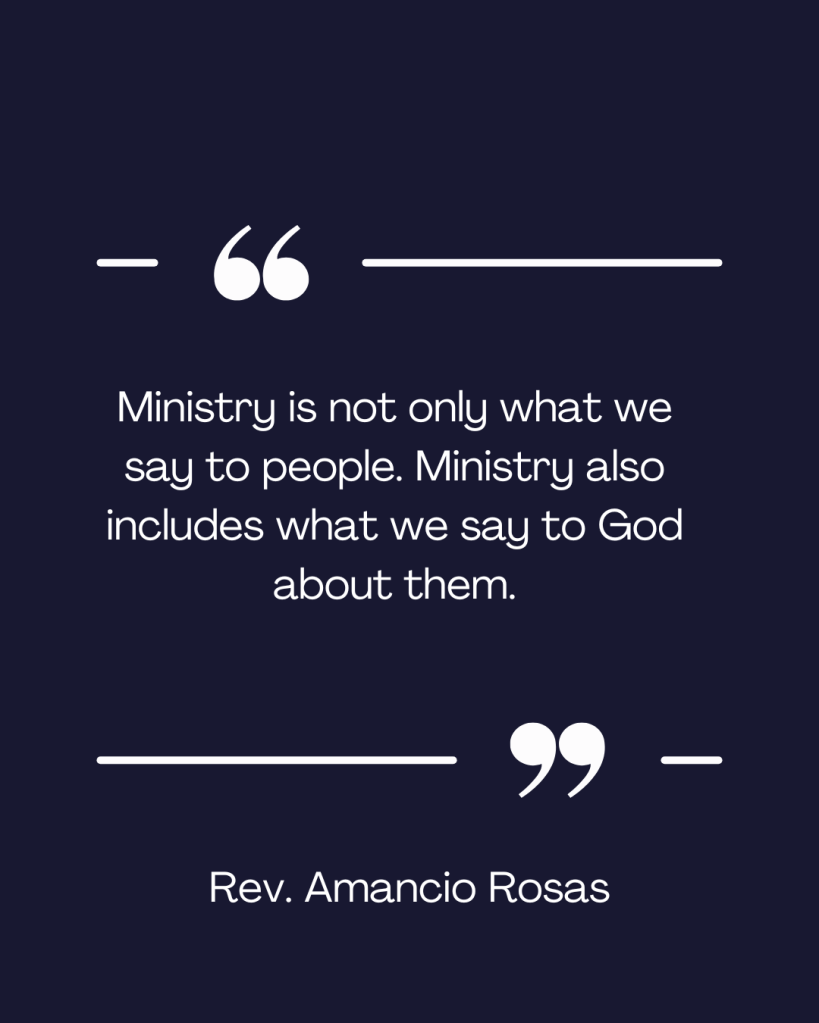
The more people God places around me, the greater my responsibility to remember that ministry is not only what I say to people. Ministry also includes what I say to God about them.
From Ritual to a Life of Worship
The challenge of Amos remains relevant: worship cannot become something we perform while ignoring the world around us.
The example of Ezra adds another dimension: when we encounter the brokenness of that world, our response should include intercession.
Biblical worship therefore refuses to remain confined to a service.
It enters our relationships.
It shapes our response to injustice.
It brings other people’s burdens into our prayers.
It calls us toward repentance.
And it continually brings us back to the mercy of God.
Perhaps one of the questions every worshiper should regularly ask is not simply, “Did I worship God today?”
Instead, we might ask:
“What is my worship producing in the way I love people, respond to brokenness, and pray for those God has placed around me?”
When worship begins transforming those areas of our lives, it moves beyond ritual and becomes a way of life.
Reflections on Eugene Peterson’s Follow the Leader series
What does it mean to be a successful Christian leader? Is success measured by the number of people attending our churches, the ministries we establish, the positions we hold, or the influence we develop? Or is there a deeper measurement that challenges our understanding of leadership altogether?
As I listened to Eugene Peterson’s Follow the Leader series, I found myself wrestling with these questions. Peterson examines the leadership of Jesus in its historical context, contrasting his approach with influential figures such as Herod, Caiaphas, and Josephus. Through these comparisons, he challenges the assumptions we often bring into Christian leadership, particularly our understanding of power, success, relationships, and personal ambition.
One of the greatest insights I gained from this series is that Jesus did not simply provide a model for becoming an effective leader. He invited us to become faithful followers.
This distinction challenges not only how I approach ministry but also how I understand my calling, my ambitions, and the importance of remaining faithful wherever God has placed me.
The challenge of following before leading
Early in the third part of his series, Peterson emphasizes a distinction that caught my attention: Jesus said, “Follow me,” not “lead like me.”
Peterson explains that following is often more difficult than leading because it requires greater attention and moral energy. This challenges the tendency to focus on developing leadership abilities without giving equal attention to our relationship with Jesus.
Leadership requires skills, knowledge, experience, and preparation. However, Christian leadership must begin with something deeper: a life of prayer, obedience, and dependence upon Christ.
Before I can lead others faithfully, I must examine whether I am faithfully following Jesus myself.
This insight brought me back to my experience as a new believer in high school. At the time, I had a strong desire to become a leader on my campus and establish a Christian club. My passion for ministry was present, but my preparation was still developing.
I wanted to lead, yet I lacked the biblical knowledge and training necessary for the responsibility I desired. I also had not fully recognized the importance of receiving guidance from the leaders God had placed in my life.
Nevertheless, that Christian club had value. We served our campus, built community, and sought to demonstrate what it meant to follow Jesus.
Looking back, I recognize that even though my preaching and teaching abilities were limited, following Jesus involved more than standing in front of people and delivering a message. It involved obedience, service, relationships, and learning to live according to his example.
That experience helped me recognize that our desire to lead must never become more important than our commitment to follow.
Prayer before personal ambition
One of the ways Peterson’s teaching challenges my current approach to leadership is by encouraging me to reflect on prayer more often than goal setting.
I enjoy establishing goals, developing plans, and pursuing opportunities. These activities have value, particularly when we are responsible for leading others. However, they also present an important spiritual question.
Am I submitting my plans to Jesus, or am I simply asking him to bless the direction I have already chosen?
Peterson emphasizes that prayer is essential to following Jesus. In the third part of his series, he discusses how prayer forms us into followers from the inside out.
This means that following Jesus is not merely about outward activities. We can participate in ministry, develop leadership abilities, and accomplish organizational goals while neglecting the spiritual formation necessary to sustain faithful discipleship.
Prayer invites us to examine our motives and surrender our direction to Christ.
As I continue developing as a minister, I want to become increasingly intentional about seeking God’s direction rather than relying exclusively on my abilities, expectations, or understanding of what should happen next.
The challenge is not to stop planning. It is to allow my plans to be influenced by Jesus.
When success becomes a distraction
Another aspect of Peterson’s teaching that challenged me was his discussion of success and failure.
Throughout his series, Peterson contrasts Jesus with influential leaders of the first century. Herod demonstrated considerable political and organizational influence, while Caiaphas exercised authority within the religious establishment.
Yet Jesus did not organize his ministry around the conventional measurements of success represented by these leaders.
In the second part of the series, Peterson explains that Jesus’ life can appear unsuccessful when evaluated according to society’s expectations. He also observes that faithful individuals can become invisible because their lives do not conform to what society values.
This challenges how we understand success within contemporary Christianity.
Our Christian communities exist in a culture shaped by music, entertainment, celebrity, social media, and numerical exposure. As individuals gain influence, they may experience increasing pressure to maintain their recognition and status.
The danger arises when preserving influence becomes more important than faithfully following Jesus.
This is especially challenging for me because I desire to serve in a pastoral ministry position in the future.
As an ordained minister currently serving without a pastoral staff position, I have wrestled with the relationship between my calling, my credentials, and the opportunities I hope to pursue.
At times, it can be tempting to view a position as validation of my ministerial identity. Yet Peterson’s teaching challenges me to examine whether I am pursuing opportunities primarily to serve others or to become somebody in the eyes of others.
A pastoral position can provide meaningful opportunities to lead, teach, disciple, and develop ministries. However, it should not determine the value of my present service or become the ultimate measurement of my faithfulness.
I am learning that being faithful where God has placed me matters just as much as preparing for wherever he may lead me next.
This gives me a desire to continue praying and trusting his direction, even when the outcome of my ministry pursuits remains unknown.
The difference between ambition and energy
One of the most helpful distinctions Peterson makes is between ambition and energy.
In the first part of his series, he discusses how ambition can become connected to personal importance, recognition, and achieving our own goals. He contrasts this with the energy, obedience, and discipline necessary for faithful service.
This distinction is particularly meaningful when pursuing leadership opportunities.
It is possible to work diligently, develop skills, establish goals, and pursue opportunities without allowing personal ambition to become the driving force behind our decisions.
The question is what motivates our pursuit.
Do I want to lead because I desire recognition, or because I see an opportunity to serve? Am I pursuing a particular position because it will make me feel successful, or because I believe I can faithfully contribute to the ministry God has entrusted to me?
These are questions I want to continue asking throughout my ministerial journey.
My desire is not to lose the energy and passion I have for ministry. Rather, I want those qualities to be shaped by prayer, obedience, and a willingness to follow Jesus wherever he leads.
A PERSONAL REFLECTION
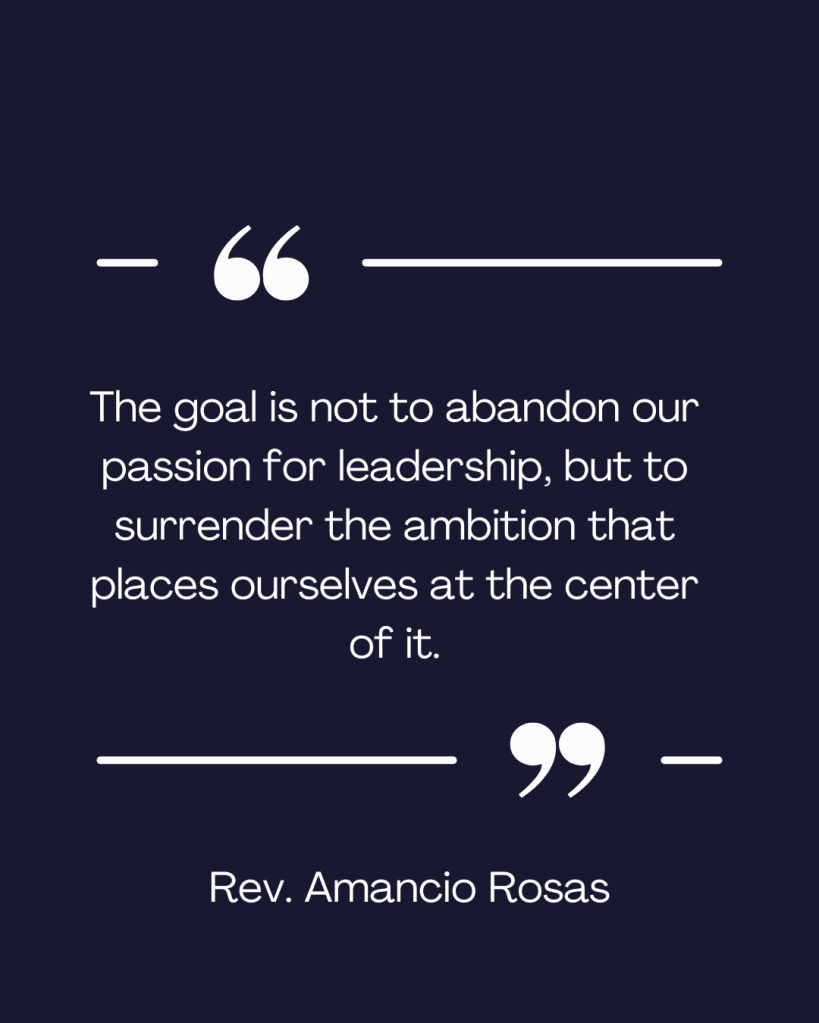
The goal is not to abandon our passion for leadership, but to surrender the ambition that places ourselves at the center of it.
Building a church culture centered on followership
Peterson’s philosophy also raises an important question about the culture we establish within our churches.
What would happen if Christ-centered leaders prioritized faithful followership over recognition, status, and conventional measurements of success?
I believe this approach could transform how we understand discipleship, prayer, and servant-hearted leadership.
1. Discipleship would become more relational
Peterson explains that Jesus used stories to invite people into relationships and personal encounters.
Rather than organizing his ministry around buildings, crowds, or prominent individuals, Jesus invested in people and invited them to participate in the life of God’s kingdom.
This challenges churches to examine how they measure their effectiveness.
Attendance, volunteer participation, and numerical growth can provide valuable information. However, these measurements do not tell the complete story of what God is doing in people’s lives.
A church may have impressive attendance while struggling to develop meaningful relationships and mature disciples. Conversely, a smaller congregation may be making a significant spiritual impact through personal mentorship, service, and discipleship.
If we implement Peterson’s philosophy, I believe our churches can develop a deeper commitment to knowing people rather than merely counting them.
The goal is not simply to attract individuals into a building. It is to help people encounter Jesus and become faithful followers of him.
2. Prayer would shape our leadership culture
A second outcome would be a greater dependence on prayer.
Following Jesus requires more than developing strategies and implementing programs. It requires leaders who continually seek his direction.
This dependence should not remain confined to the church building or formal ministry activities. It should influence how we live, work, serve our communities, and interact with others wherever God has placed us.
A prayerful leadership culture would encourage us to examine our decisions, surrender our expectations, and remain attentive to God’s direction amid uncertain circumstances.
We can still establish goals and develop organizational plans. However, we must recognize that our plans are ultimately subject to God’s purposes.
Prayer reminds us that we are followers before we are leaders.
3. Servant-hearted leadership would replace the pursuit of status
A third outcome would be a leadership culture that emphasizes service rather than personal recognition.
When leaders understand the difference between ambition and energy, ministry opportunities become responsibilities to steward rather than positions through which to establish personal importance.
This could influence how churches develop leaders, empower volunteers, and distribute ministry responsibilities.
Instead of concentrating attention on prominent individuals, churches could cultivate environments where people are equipped to serve according to their gifts, abilities, and spiritual maturity.
Leadership development would involve more than teaching organizational skills. It would include helping people develop their character, examine their motives, and grow in their relationship with Jesus.
Ultimately, this approach would encourage the Body of Christ to pursue opportunities with a servant’s heart.
Following the Master wherever he leads
Peterson’s Follow the Leader series has challenged me to reconsider what it means to pursue leadership faithfully.
I still desire to grow as a minister, develop my abilities, pursue future opportunities, and serve in pastoral ministry. However, I increasingly recognize that none of these aspirations should become more important than following Jesus.
My calling is not validated by a position, and my faithfulness cannot be measured exclusively by visible accomplishments.
I want to remain faithful where God has placed me while continuing to prepare for wherever he may guide me.
This requires prayer, obedience, humility, and a willingness to examine my motives continually.
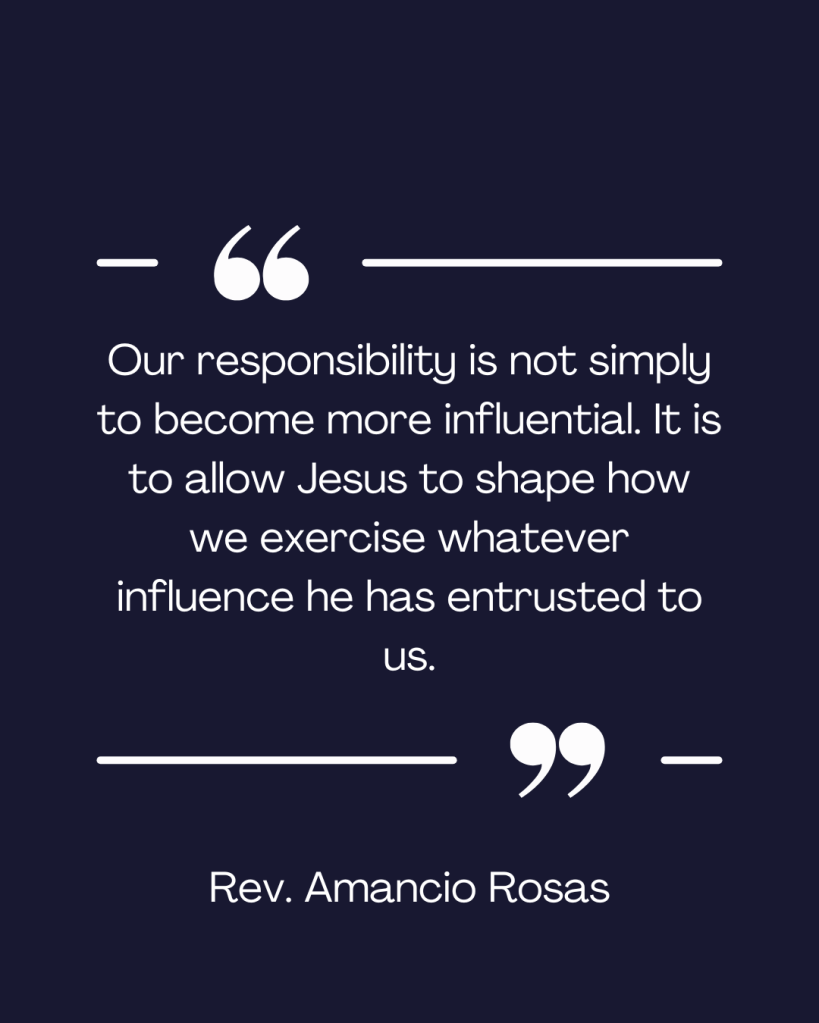
As Christian leaders, we must remember that our responsibility is not simply to become more influential. It is to allow Jesus to shape how we exercise whatever influence he has entrusted to us.
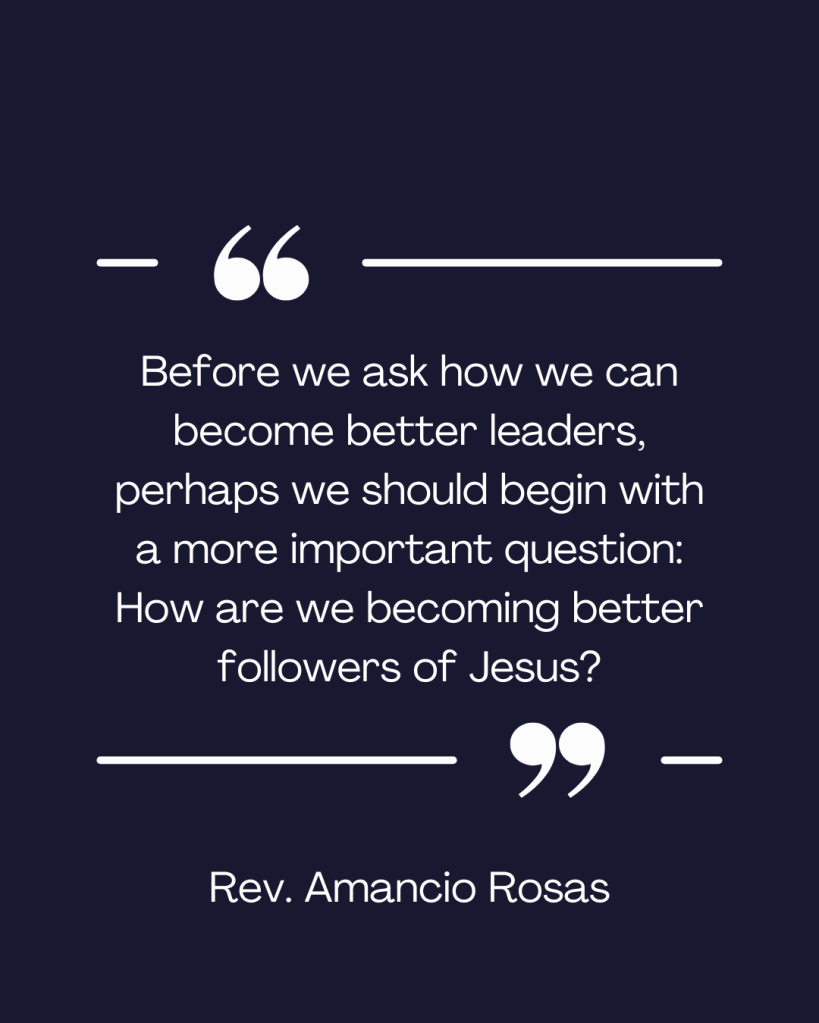
Before we ask how we can become better leaders, perhaps we should begin with a more important question:
How are we becoming better followers of Jesus?
This reflection is based on Eugene Peterson’s three-part Follow the Leader series, particularly his discussions of followership, relational leadership, prayer, success, and the distinction between ambition and energy.
Worship has a way of revealing what is happening within the human heart.
When we think about sin, words such as shame, guilt, condemnation, and separation often come to mind. Scripture certainly takes sin seriously. Yet for the believer, awareness of sin should not simply drive us into shame. Instead, through Christ, conviction can become an invitation to repentance, restoration, and deeper worship.
This raises an important question for the church: Can we truly understand worship without confronting the reality of sin?
Worship Requires an Awareness of God’s Holiness
One of the most powerful biblical pictures of worship appears in Isaiah 6. Isaiah encounters the holiness and majesty of God and immediately becomes aware of his own condition:
“Woe is me! for I am undone; because I am a man of unclean lips.” — Isaiah 6:5
Isaiah’s response demonstrates something important about worship. The closer he becomes to the revelation of God’s holiness, the more aware he becomes of his own need for cleansing.
John Oswalt emphasizes this relationship between sin and worship by arguing that genuine worship requires an awareness of our uncleanness before a holy God. Worship is not merely celebration. It is also confrontation.
We encounter God as He is, and that encounter reveals areas of our lives that need to be surrendered to Him.
Yet Isaiah’s story does not end with his uncleanness.
God provides cleansing.
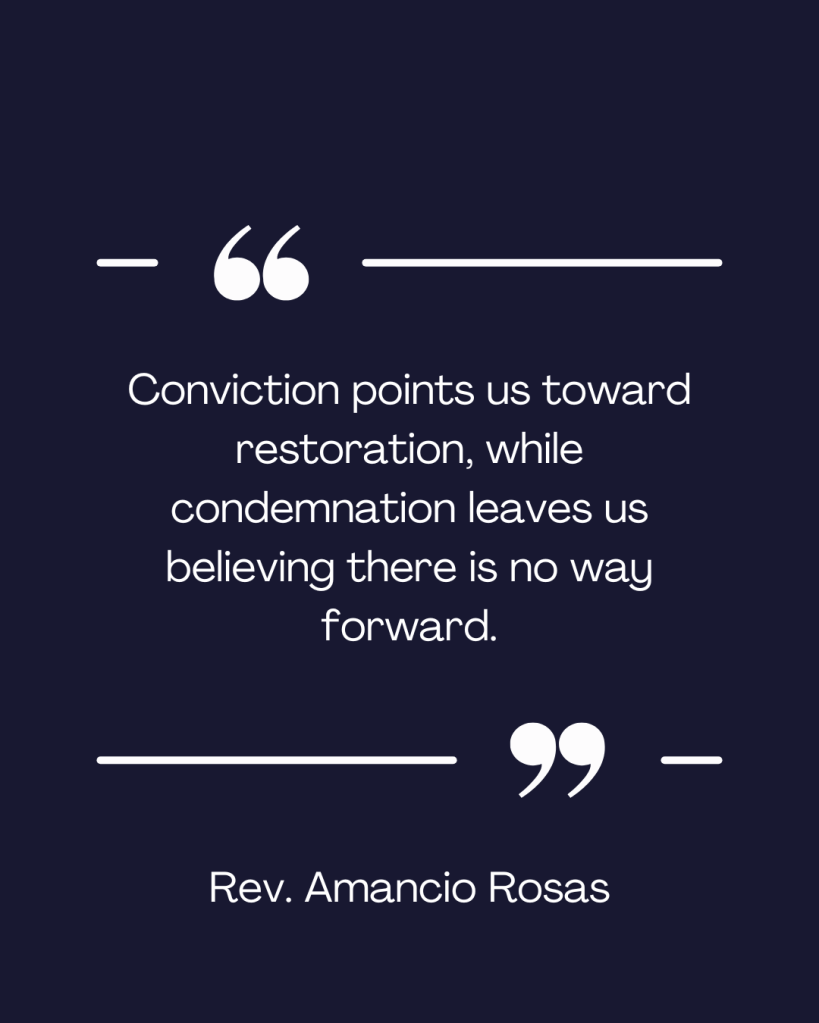
That distinction matters tremendously for the church. Conviction points us toward restoration, while condemnation leaves us believing there is no way forward.
Healthy Christian worship should therefore create room for both realities: the seriousness of sin and the transforming grace of God.
What Would a Culture of Surrender Look Like?
This challenges us to consider how our churches address sin within worship.
Do our worship gatherings provide opportunities for people to examine their hearts before God? Do we teach believers how to distinguish conviction from condemnation? Do we allow moments of reverence, repentance, prayer, and surrender alongside moments of celebration?
Sometimes surrender can even become physically expressed.
A believer may kneel.
Someone may bow at an altar.
Another person may quietly pray while members of the congregation surround them in prayer.
These actions are not what make repentance genuine. Nevertheless, physical expressions can communicate an inward reality: “Lord, I surrender myself to You.”
There is something beautiful about this within the gathered church. Repentance does not necessarily happen in isolation. A believer can encounter God personally while simultaneously being surrounded by a community that prays, encourages, and walks alongside them.
Worship therefore becomes both personal and communal.
Idolatry Is Still a Worship Problem
Sin is not the only issue that confronts our worship. Scripture repeatedly warns God’s people about idolatry.
When reading the accounts surrounding Jeremiah and Ezekiel, we encounter a people whose worship had become corrupted by competing allegiances. Idolatry was not merely an unfortunate spiritual habit. It represented misplaced worship.
Although our modern idols may look different, the underlying problem remains.
Timothy Keller famously described counterfeit gods as things that become so central to our identity and security that losing them can make life feel almost unbearable.
That definition should cause us to examine ourselves.
Our idols may not be statues.
They may be careers.
Relationships.
Money.
Recognition.
Education.
Influence.
Political causes.
Even our talents and opportunities can become dangerous when they begin providing the identity, security, or significance that ultimately belongs to God.
The question is therefore not merely, “What am I pursuing?”
A deeper question is:
“Why am I pursuing it?”
When Good Things Become Ultimate Things
This became particularly challenging for me because Ecclesiastes has also shaped my thinking about ambition and purpose.
Ecclesiastes repeatedly confronts humanity’s attempt to find ultimate meaning through earthly pursuits. Wealth, accomplishment, pleasure, wisdom, and labor cannot carry the weight of ultimate significance apart from God. They become a chasing after the wind.
That does not mean ambition, education, ministry, relationships, careers, or personal development are inherently wrong.
The issue is what place they occupy within our hearts.
I have increasingly found myself asking:
Do I trust my own gifting and abilities, or do I trust the God who gave them to me?
There is an important difference.
God can provide opportunities, abilities, relationships, and influence that genuinely glorify Him. Yet even gifts from God can become idols when the gift becomes more important than the Giver.
Christian surrender therefore involves more than abandoning obviously sinful behavior. Sometimes surrender means placing our greatest dreams before God and saying:
“Lord, even this belongs to You.”
Worship Reorders the Heart
Perhaps this is one of the greatest purposes of worship.
Worship reminds us who God is.
And when we understand who God is, we begin to understand everything else differently.
Our sins are confronted by His holiness.
Our shame encounters His grace.
Our idols are exposed by His worthiness.
Our ambitions become surrendered to His purposes.
Our gifts become instruments for His glory rather than monuments to ourselves.
True worship does not simply produce an emotional experience on Sunday morning. True worship continually reorders the heart around God.
That leaves me with several questions worth continuing to explore:
How can churches teach and model repentance without creating cultures of condemnation?
How can our worship gatherings cultivate reverence and surrender alongside joy and celebration?
How can Christians recognize when something good has quietly become an idol?
And perhaps the most personal question:
If God removed the things I depend upon for identity, significance, and security, would God Himself still be enough?
When we read the Gospel of Luke, we primarily encounter Jesus as our Lord and Savior: the Son of God who came to seek and save the lost. Yet as we follow His ministry, we also discover something about the way Jesus led people.
Jesus had a mission. He developed disciples. He gave others responsibility. He confronted issues of character and commitment. And when the pressure surrounding His mission intensified, He remained dependent upon the Father.
Reading Luke through the lens of leadership challenged me to think beyond leadership as simply having a title or position. Jesus demonstrates a form of leadership centered on mission, development, empowerment, character, and spiritual dependence.
Here are five leadership principles that stood out to me.
1. Stay Faithful to the Mission When Rejection Comes
Luke 4:18–29
Early in His ministry, Jesus entered the synagogue in Nazareth and read from the prophet Isaiah. He announced that the Scripture was being fulfilled in their hearing.
Yet the response eventually became hostile.
The people questioned Jesus because they knew Him as Joseph’s son. As the encounter continued, their skepticism turned into anger and rejection.
Still, rejection did not redefine Jesus’ mission.
That presents an important challenge for leaders: How much does the approval of others determine whether we believe we are successful?
Leadership inevitably brings different opinions. Some people will understand the mission, while others may question it. There will even be moments when rejection makes us question ourselves.
Jesus reminds us that faithfulness cannot ultimately be built upon approval. Christian leaders must continually return to what God has called them to accomplish.
That doesn’t mean leaders should refuse correction or ignore wise counsel. Rather, it means opposition by itself does not determine whether the mission is worth pursuing.
Our foundation must remain deeper than applause.
2. Develop People Intentionally
Luke 6:12–19
One of the most interesting things about Jesus’ leadership is the size of the group He chose to develop closely.
Jesus ministered to crowds, but He invested deeply in a smaller group of disciples. Before selecting the Twelve, Luke tells us that Jesus spent the night in prayer.
Jesus was intentional about who He would develop.
This challenged my thinking about mentorship. Leaders sometimes feel responsible for personally developing everyone around them. Depending on the size of the organization, that can quickly become unrealistic.
Jesus demonstrates another approach: invest deeply in people who can eventually influence others.
I see this principle even while working with students. When managing a group of more than fifteen students, every student brings different personalities, perspectives, attitudes, and needs. Trying to personally lead every student at exactly the same depth can become overwhelming.
But what happens when a leader begins developing a smaller group of student leaders?
Those students can begin influencing the culture around them.
Leadership development then becomes multiplication.
3. Give People Responsibility and the Authority to Carry It Out
Luke 9:1–10
Jesus didn’t keep His disciples beside Him forever.
Eventually, He sent them.
Luke records that Jesus gathered the Twelve, gave them power and authority, provided instructions, and sent them out to proclaim the kingdom of God and heal the sick. Later, they returned and reported what they had done.
Notice the progression:
Jesus called them.
Jesus developed them.
Jesus empowered them.
Jesus sent them.
Jesus received their report.
Jesus understood something every leader eventually has to learn: the mission becomes limited when everything depends upon one person.
Healthy leadership requires delegation, but biblical delegation involves more than handing someone a task.
People need preparation.
They need responsibility.
They need appropriate authority.
They need opportunities to practice.
And they need feedback afterward.
Churches sometimes become so focused on filling volunteer positions that we forget the importance of developing the person filling the position.
Imagine someone responsible for displaying lyrics during worship. It may seem like a simple responsibility, but that person needs to understand the software, lyrics, timing, pace, and transitions. Without preparation, mistakes can distract the congregation from participating in worship.
Giving someone a position is not the same as developing them for the position.
Jesus didn’t simply need workers. He developed disciples who could participate in His mission.
4. Character Matters More Than Charisma
Luke 18:18–23
When a ruler approached Jesus asking about eternal life, Jesus eventually confronted something deeper than outward obedience.
“You still lack one thing.”
Jesus identified something that challenged the man’s commitment. His wealth had become a barrier he was unwilling to surrender.
The encounter reminds us that leadership development sometimes requires uncomfortable conversations.
Someone can be passionate and still need development.
Someone can be gifted and still need accountability.
Someone can desire influence without being prepared for the sacrifice accompanying it.
This is especially important in ministry.
It can be easy to desire opportunities to preach, stand on a platform, lead worship, hold a title, or receive recognition. But what happens when discipleship involves correction? What happens when leadership requires serving somewhere nobody notices? What happens when someone identifies an area of our character that needs to change?
Charisma can attract attention, but character sustains leadership.
Healthy leadership cultures therefore cannot merely identify people’s gifts. They must also create environments where people can be discipled, corrected, challenged, and developed.
5. Leadership Requires Dependence Upon God
Luke 22:39–46
Eventually, Luke brings us to one of the most vulnerable moments of Jesus’ ministry: Gethsemane.
Jesus knew what was approaching.
He experienced tremendous anguish. Yet rather than pretending the situation was easy, Jesus prayed.
His prayer included the words:
“Yet not my will, but yours be done.”
There is something deeply important here for Christian leadership.
Jesus does not model leadership as emotional invulnerability. He does not pretend pressure doesn’t exist. Instead, He brings His anguish before the Father and remains obedient to God’s purposes.
Leadership will bring moments of pressure.
There may be misunderstanding, disappointment, difficult decisions, rejection, or even betrayal. Those moments expose the limits of leadership techniques.
Sometimes we don’t need another strategy.
We need God’s strength.
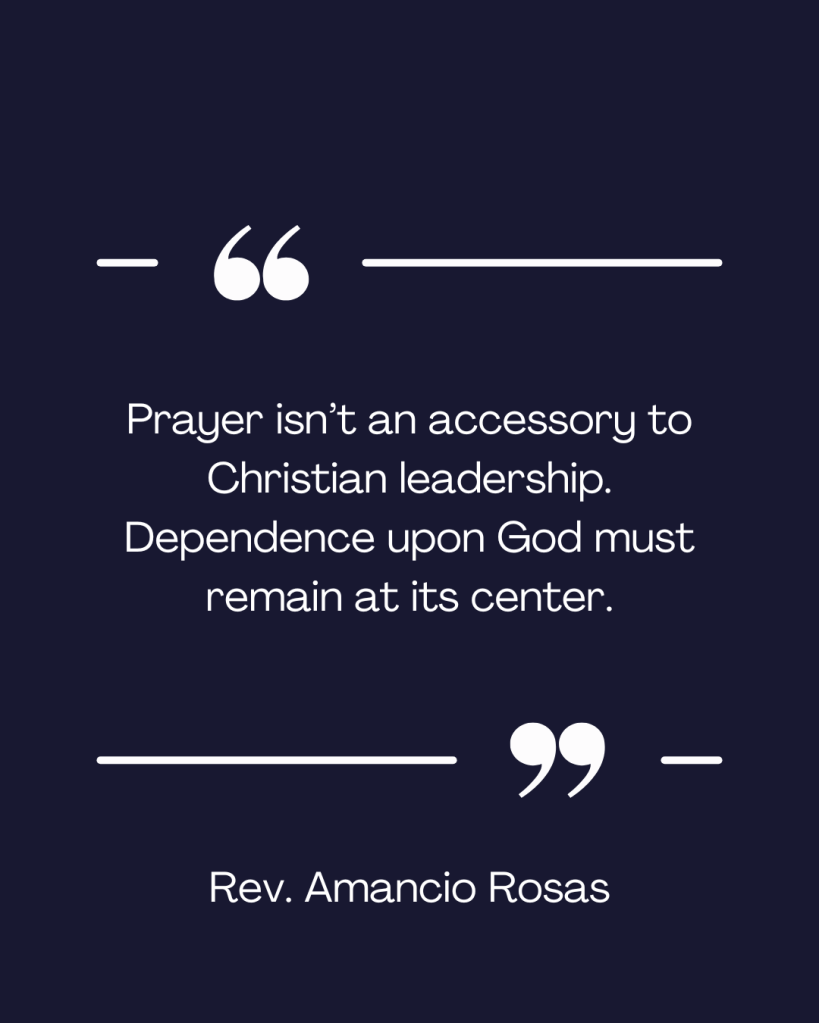
Prayer therefore isn’t an accessory to Christian leadership. Dependence upon God must remain at its center.
A Pattern of Leadership in Luke
When I put these passages together, I noticed that they form something of a progression:
1.) Mission
2.) Development
3.) Empowerment
4.) Character
5.) Perseverance
Jesus knew the mission.
He selected people to develop.
He entrusted those people with responsibility and authority.
He confronted issues that could hinder genuine commitment.
And through suffering and pressure, He remained dependent upon the Father and faithful to His mission.
That gives us a powerful picture of leadership.
Leadership isn’t merely about starting something.
It’s about knowing the mission well enough to remain faithful when rejection comes.
It’s about developing people instead of doing everything ourselves.
It’s about trusting others with meaningful responsibility.
It’s about caring enough about people to confront character issues.
And ultimately, it’s about recognizing that we cannot fulfill God’s purposes through our own strength.
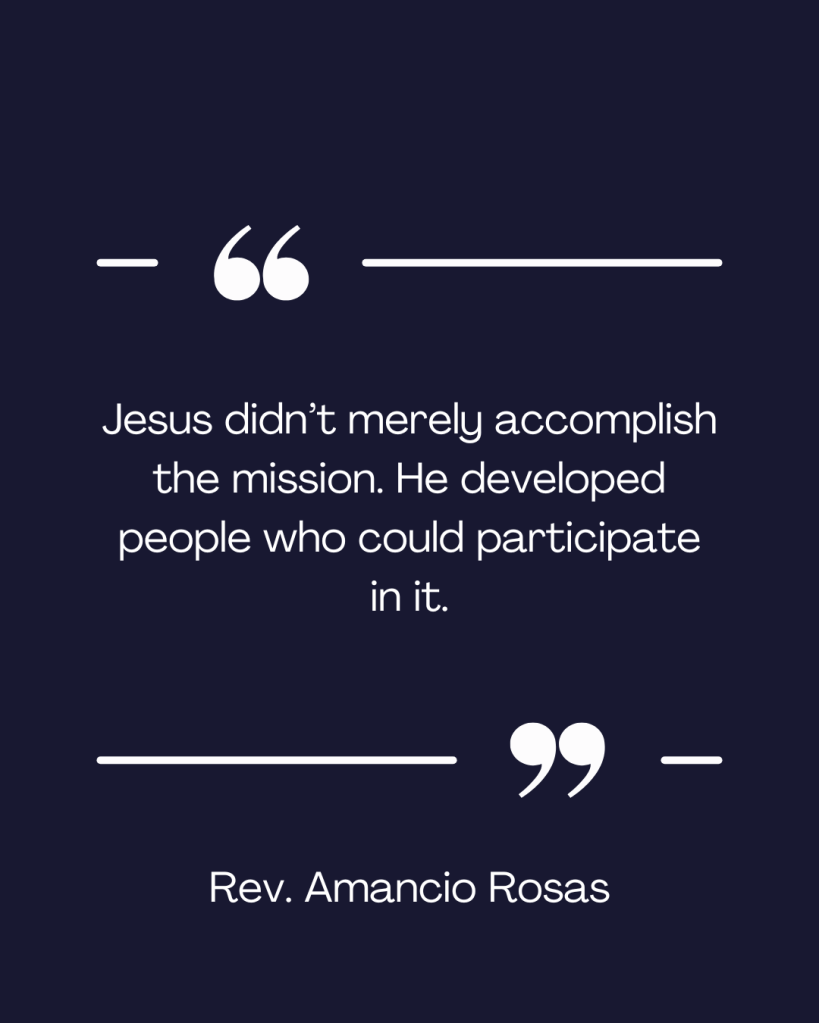
The Gospel of Luke reminds me that Jesus didn’t merely accomplish a mission.
He developed people who could participate in it.
Perhaps that is one of the greatest questions every Christian leader should ask:
Am I simply accomplishing the work in front of me, or am I developing people who can carry the mission forward?
Leadership can sometimes feel like navigating without a clear sense of direction.
We may know where we believe God has called us, but circumstances change. Opportunities disappear. Expectations do not become reality. Life introduces responsibilities we did not anticipate, and suddenly the path toward our calling looks different from the one we originally imagined.
The question then becomes: How do we remain faithful when the direction of our lives requires recalibration?
As I reflected on the leadership of the Judean kings, two ideas stood out to me: our dependence on the Holy Spirit and our willingness to recalibrate when necessary. Together, they have challenged me to think about leadership not simply as what I accomplish, but as what God is doing within me.
Leading From the Inside Out
Hezekiah’s leadership provides an interesting picture of restoration.
His reign involved repairing what had been neglected and restoring what had been lost. One fascinating part of his leadership was the development of Jerusalem’s water system. Water needed to be brought into the city and protected from outside threats.
That physical reality caused me to think about something spiritual.
What sustains us must come from the inside out.
For Christian leaders, our greatest resource cannot simply be our education, experience, personality, talents, or expertise. Those things can certainly be valuable, but they cannot become substitutes for dependence upon God.
As a Pentecostal Christian, this makes me think particularly about dependence upon the Holy Spirit.
Spirit-empowered leadership is not limited to what happens behind a pulpit, during worship, or at an altar. Dependence upon the Spirit should influence our lifestyle, decisions, relationships, priorities, and direction.
It requires continually seeking God and allowing Him to work within us.
The more experience we gain, however, the easier it can become to trust ourselves.
We begin recognizing patterns. We know how to solve certain problems. Education gives us frameworks. Experience gives us confidence. Leadership gives us instincts.
None of those things are inherently wrong.
The danger comes when competence begins replacing dependence.
I want my lifestyle, decision-making, seeking of God, and continued infilling of the Spirit to keep my own strength and expertise from becoming the foundation of everything I do.
Because leadership that begins internally with God will eventually become visible externally through the leader.
When Leadership Loses Its Orientation
The leaders who followed Josiah provide another sobering picture.
A kingdom that had experienced reform eventually entered instability. Leadership deteriorated, circumstances changed rapidly, and Judah moved toward destruction and exile.
Their stories made me think about recalibration.
There is a phenomenon pilots can experience called spatial disorientation. Under certain conditions, their senses can give them an inaccurate perception of the aircraft’s position and movement. What feels correct may not actually correspond with reality.
Life can sometimes feel similar.
We develop expectations about where we should be, what our calling should look like, or how quickly certain things should happen. Then circumstances change.
Suddenly, what we expected and what we are experiencing no longer match.
That is where recalibration becomes necessary.
When Calling Doesn’t Look Like You Expected
I’ve experienced this personally.
At 25, circumstances caused me to question aspects of my calling because my life did not look like what I believed ministry was supposed to look like.
There can be an unspoken assumption in ministry that fulfilling your calling means eventually obtaining a particular position.
Become the pastor.
Get the ministry opportunity.
Receive the title.
Step onto the platform.
When those opportunities don’t materialize according to our expected timeline, it can become easy to wonder whether we misunderstood God.
But as I’ve grown, my understanding of calling has expanded.
Now, at 30, I’m increasingly recognizing that ministry does not begin when someone gives me a ministry position.
Calling can be lived wherever God has presently entrusted influence to me.
That includes the church, but it can also include the workplace.
It includes conversations.
It includes relationships.
It includes how we serve people who may never enter our churches.
Sometimes being missional means recognizing that our current environment isn’t merely something we’re enduring until the “real ministry” arrives.
It may actually be part of the mission field God has entrusted to us right now.
Recalibration Is Not Abandonment
This has changed how I think about redirection.
Recalibrating does not necessarily mean abandoning what God originally placed within us.
Sometimes recalibration is precisely how God brings us back into alignment with the calling.
There is a difference between abandoning a destination and adjusting how we navigate toward it.
That distinction matters because calling can easily become intertwined with personal ambition. We can begin with sincere obedience to God and gradually develop such a specific picture of what obedience is supposed to look like that we struggle when God doesn’t follow our blueprint.
Dependence upon the Holy Spirit challenges that mentality.
If the Spirit is genuinely leading my life, then I must remain willing for God to adjust my expectations, methods, timing, and even opportunities.
The calling belongs to Him before it belongs to me.
Approaching the Next Transition
This becomes especially meaningful as I approach another transition in my life.
Finishing my master’s degree naturally raises questions about what comes next.
Where should I serve?
What opportunities should I pursue?
What should the next stage of ministry and education look like?
Those are important questions, but I am realizing there is an even more important one:
What does God want?
There are things I desire for my future. There are ministry opportunities I would welcome. There are educational and vocational goals I continue to pursue.
But I don’t want desire alone determining direction.
I want prayer to precede movement.
I want dependence upon the Holy Spirit to precede strategy.
And I want enough humility to recalibrate when God’s direction differs from my expectations.
Leadership Begins Within
This connects with something I continue learning about leadership.
We often measure leadership externally: influence, effectiveness, accomplishments, positions, organizations, or the number of people following us.
Scripture continually brings us back inward.
What are we trusting?
Who are we becoming?
What is driving our decisions?
Are we still listening?
Are we still dependent upon God?
Are we willing to change direction when necessary?
Hezekiah’s story reminds me that restoration begins internally before its effects become visible externally. The instability that followed Josiah reminds me how quickly leadership can lose its orientation when its foundation disappears.
Both lead me toward the same conclusion:
Healthy Christian leadership requires both dependence and recalibration.
Dependence keeps God as the source of our strength.
Recalibration keeps us responsive when He adjusts our direction.
Perhaps faithfulness is not always about walking the exact path we imagined when God first called us.
Sometimes faithfulness means trusting Him enough to let Him redraw the route.
And as I continue navigating ministry, education, work, relationships, and whatever comes next, that is the kind of leader I want to become:
Spirit-dependent enough to follow and humble enough to recalibrate.
Starting well is important, but finishing well reveals much about the leader we have become.
This was one of the strongest convictions I walked away with while studying the leadership of the Judean kings. Throughout their stories, a troubling pattern emerges: leaders can begin faithfully, experience success, and even leave a positive legacy, yet gradually lose their dependence on God.
Their stories caused me to think beyond leadership as a position. Leadership includes how we respond to correction, whose voices we allow to influence us, whether we know when to rest, and how intentionally we prepare those coming after us.
Starting Well Is Not Enough
One lesson I learned years ago through preaching and teaching is that introductions and conclusions deserve intentional attention. It is possible to capture people’s attention at the beginning of a message but fail to bring everything together at the end.
Leadership can work the same way.
King Asa began his reign with trust in God, but that trust deteriorated toward the end of his leadership. Fear influenced his decisions, he rejected prophetic correction, and the conclusion of his reign looked considerably different from its beginning.
That challenged me to consider something personally: How do I respond when someone corrects me?
I recently experienced correction from pastoral leadership concerning gestures and behaviors that needed greater explanation. Although the correction was delivered more forcefully than I would have preferred, I recognized that I still had a responsibility to listen. The issue was primarily methodological rather than a rejection of my character or calling.
Leadership requires enough humility to recognize that even small matters deserve consideration.
Perception can turn something seemingly insignificant into something much larger when understanding, accountability, and vulnerability are absent. Sometimes maturity means being willing to listen even when we disagree with someone’s delivery.
The danger is not simply receiving incorrect advice. Sometimes the greater danger is becoming too arrogant to believe we need advice at all.
Who Has Permission to Influence You?
That question became even clearer through my interaction with classmates.
One discussion centered on Rehoboam, whose leadership demonstrates the consequences of listening to the wrong voices. He rejected the wisdom of experienced counselors and instead followed advice that ultimately contributed to the division of the kingdom.
Yet the solution cannot simply be, “Listen to people.”
Leaders must develop discernment.
Seeking counsel is valuable, but Christian leadership requires bringing that counsel before the Lord. Not every voice deserves equal influence, regardless of how confident, familiar, or persuasive that voice may be.
This creates an important tension:
We must remain teachable without becoming directionless.
We need people who can challenge us, correct us, encourage us, and expose our blind spots. At the same time, our ultimate dependence cannot rest upon human voices. Faithfulness to God helps us navigate the noise surrounding leadership.
The stories of Rehoboam and Joash demonstrate this from different directions. Rehoboam rejected wise counsel. Joash flourished under the mentorship of Jehoiada but later departed from faithfulness after that influence was gone.
Together, their lives remind me that mentorship matters, but mentorship must also produce leaders capable of walking faithfully when the mentor is no longer present.
Mentorship Should Build Bridges Between Generations
Another discussion challenged me to think about leadership succession.
Eventually, every leader’s season ends. Someone else will carry the responsibility forward. Therefore, leadership cannot merely concern what I accomplish during my lifetime. I must also consider whom I am preparing to lead after me.
As someone passionate about discipleship, I believe this requires building intentional bridges between generations.
But I also believe mentorship can work in both directions.
Older and more experienced generations possess wisdom that younger leaders desperately need. They have practical experiences, theological journeys, successes, failures, and lessons that cannot simply be downloaded from the internet or learned from a textbook.
At the same time, younger generations possess knowledge and tools that can strengthen those who came before them.
Technology provides a simple example. Churches increasingly use digital systems for registration, communication, social media, events, and ministry administration. Someone who grew up using these tools may navigate them almost instinctively, while another faithful and experienced leader may struggle with them.
Neither generation needs to dismiss the other.
The younger generation can provide new tools while the older generation provides tested wisdom.
Healthy leadership culture creates room for both.
Mentorship, therefore, should not simply be understood as information traveling from old to young. It should become a bridge where wisdom travels forward and innovation travels backward.
Strong Leaders Also Know When to Stop
Leadership development, however, cannot only concern productivity.
King Amaziah’s story challenged me in another area: rest.
His life demonstrates what can happen when dependence upon God’s strength gives way to dependence upon our own. That principle forced me to evaluate the rhythm of my own life.
There are seasons when life simply does not slow down. Responsibilities continue. Work continues. Ministry continues. Relationships require attention. Education requires discipline.
I understand that tension personally. Between working two jobs, serving in ministry, preparing for marriage, and finishing my master’s degree, rest can easily feel like something that interrupts productivity rather than something necessary for healthy leadership.
I have had to rethink that assumption.
I am naturally productive, so even something as simple as taking a nap once made me feel guilty. It felt like wasted time. Over time, however, I have learned that small periods of rest help relieve pressure and allow me to return to my responsibilities with greater clarity.
I am also learning the importance of withdrawing weekly. Adjustments in my work schedule have created more flexibility and given me weekends back, creating an opportunity to establish a more intentional rhythm of rest.
Rest is not the abandonment of responsibility.
It is the recognition that I am not sustained solely by my own strength.
Leadership Begins With Leading Yourself
Perhaps this is where all these lessons intersect.
Leadership is not confined to what happens behind a pulpit, inside an organization, or underneath a title.
Leadership involves how I receive correction.
It involves whose voices I permit to shape me.
It involves whether I can distinguish wise counsel from distracting noise.
It involves whether I am developing people who can eventually lead without me.
And it involves whether I can stop working long enough to remember that God’s kingdom does not depend entirely upon my productivity.
The Judean kings repeatedly demonstrate that yesterday’s faithfulness does not guarantee tomorrow’s faithfulness. Leaders must continually cultivate dependence upon God.
That changes the question from simply, “How do I become successful?”
A better question becomes:
“Who am I becoming while I lead?”
I want to become a leader who listens without surrendering discernment, receives correction without allowing pride to dominate, rests without guilt, learns from those ahead of me, contributes to those who have gone before me, and intentionally prepares those who will come after me.
Starting well matters.
But ultimately, I want to lead in such a way that when the conclusion is written, faithfulness is still part of the story.
It is with both grief and gratitude that I reflect on the life of Superintendent Bret Allen. While his passing is deeply felt, I hold onto the assurance that this is not goodbye, it is see you soon in the presence of the Lord.
I want to honor him not just by what he accomplished publicly, but by how he personally impacted my life and ministry. His influence wasn’t abstract, it was practical, timely, and deeply formative in key moments of my journey.
1. A Voice of Wisdom in Conflict and Reconciliation
I first met Superintendent Allen during the process of receiving my ministry credentials. Through that connection, I was able to seek his counsel during one of the most challenging seasons of my ministry walking through conflict, unforgiveness, and the tension of reconciliation.
He told me something that stayed with me:
“In ministry, you will face trials because of the humanity of the church, but you are still called to pursue peace.”
That counsel wasn’t just comforting, it was corrective and directive. He didn’t minimize the difficulty, but he pointed me toward responsibility.
Biblical Foundation He Modeled
“If it is possible, as far as it depends on you, live at peace with everyone.” — Romans 12:18
“Make every effort to keep the unity of the Spirit through the bond of peace.” — Ephesians 4:3
“Blessed are the peacemakers, for they will be called children of God.” — Matthew 5:9
With his guidance, I pursued reconciliation in a complicated situation and over time, I witnessed something powerful: restoration that only God could bring.
That moment didn’t just resolve a conflict it shaped how I approach people, ministry, and relationships moving forward.
2. Strength in a Season of Internal Struggle
There was another season where I wrestled deeply with my calling, a “dark night of the soul” moment that many in ministry experience but few openly talk about.
Doubt. Insecurity. Questions of worth.
What stood out about Superintendent Allen was his willingness to speak directly into that space. He reminded me to stay grounded in what God had already spoken.
He didn’t try to overcomplicate it, he simply reinforced truth:
God called you
Stay where He placed you
Keep moving forward
Biblical Foundation He Reinforced
“The gifts and the calling of God are irrevocable.” — Romans 11:29
“Let us not grow weary in doing good, for at the proper time we will reap a harvest if we do not give up.” — Galatians 6:9
“Being confident of this, that He who began a good work in you will carry it on to completion.” — Philippians 1:6
That encouragement anchored me. It didn’t remove the struggle instantly, but it gave me stability within it.
And sometimes, that’s exactly what a leader is called to do.
3. A Vision for Faithfulness Over Time
One of the most practical and impactful pieces of advice he gave me came when I stepped into serving within a non-denominational church context.
My ministry journey had been marked by movement, short seasons, transitions, and gaps. But Superintendent Allen challenged me with something simple yet profound:
Serve with longevity in mind.
He emphasized the importance of staying, building, and committing, not just serving in moments, but investing over time.
Biblical Foundation He Modeled
“Now it is required that those who have been given a trust must prove faithful.” — 1 Corinthians 4:2
“Let us consider how we may spur one another on toward love and good deeds, not giving up meeting together…” — Hebrews 10:24–25
“Well done, good and faithful servant.” — Matthew 25:21
That perspective reshaped how I view ministry, not as a series of opportunities, but as a long-term calling that requires consistency and endurance.
4. The Legacy He Leaves Behind
When I reflect on his impact, four themes stand out:
Unity
Reconciliation
Empowerment
Love
These weren’t just things he taught, they were things he lived.
And that is the kind of legacy that doesn’t fade with time, it multiplies through the lives he influenced.
Closing: A Hope That Anchors Us
While we grieve, we do not grieve without hope.
Our Confidence
“To be absent from the body is to be present with the Lord.” — 2 Corinthians 5:8
“I am the resurrection and the life. The one who believes in me will live, even though they die.” — John 11:25
“We will be with the Lord forever.” — 1 Thessalonians 4:17
Because of Christ, this is not the end of his story, and it is not the end of ours.
Superintendent Bret Allen didn’t just lead from a position, he shaped lives through wisdom, presence, and faithfulness. I am one of those lives, and I will carry forward the lessons he instilled: to pursue peace, remain in my calling, and serve faithfully for the long haul.