What Does It Mean to Be Fully Human?
What does it mean to be fully human? Is our humanity defined by our biological composition, intellectual capacities, cultural diversity, or something far greater?
These questions came to mind as I studied Matthew T. Seddon’s article, Toward an Anthropologically Engaged Theology: Implications from Human Evolution for Theological Anthropology, published in the Anglican Theological Review.
Seddon explores the relationship between scientific understandings of human evolution and the theological concept of the Imago Dei, or the Image of God. He challenges traditional attempts to identify human uniqueness through individual characteristics such as intelligence, rationality, spirituality, and language. Instead, he proposes that humanity’s remarkable diversity may offer a meaningful way to understand what makes us distinctive.
One aspect of his argument particularly captured my attention: the relationship between diversity and unity, which Seddon connects to the doctrine of the Trinity.
Although I appreciate his recognition of human diversity, my reflections led me toward a different theological emphasis.
I believe the fullness of redeemed humanity must begin with Jesus Christ, while diversity becomes one of the meaningful expressions of God’s creative and redemptive purposes.
This does not diminish our individuality. Rather, it invites us to consider how our identity, relationships, and calling find their proper orientation through communion with God.
Created in His Image: Humanity’s Original Identity
Genesis 1:26–27 establishes the foundation for understanding humanity’s identity. God creates humanity in His image, both male and female.
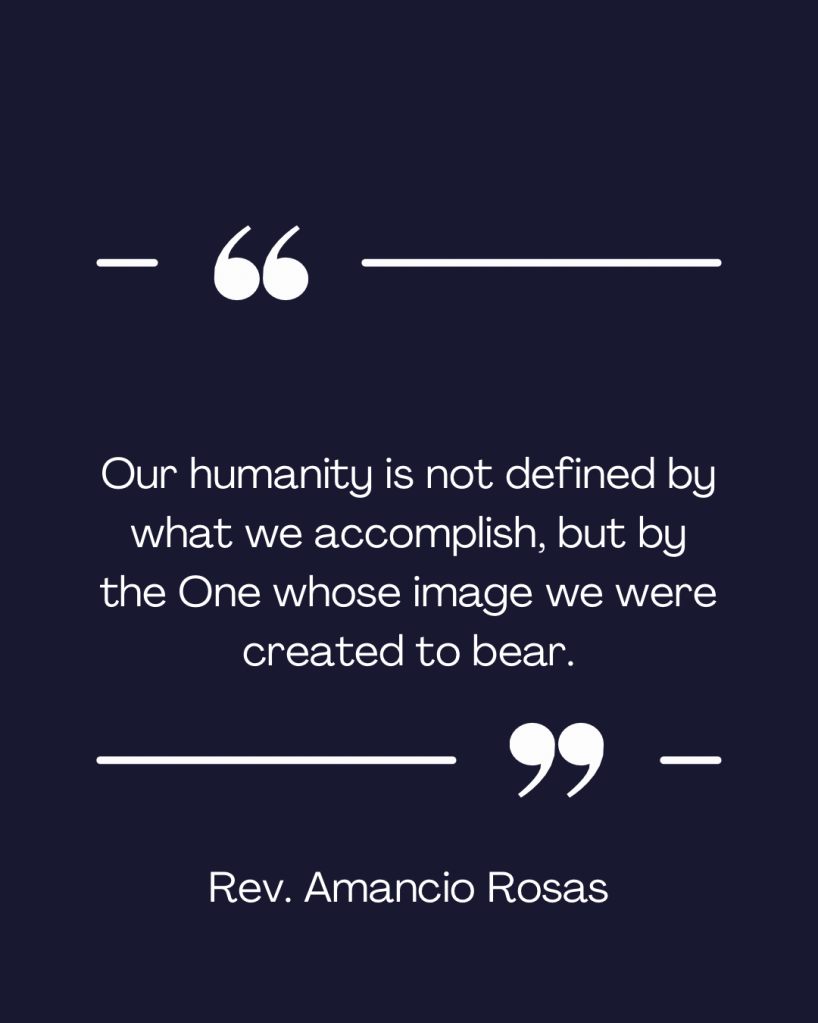
What stands out to me is that humanity’s dignity originates with God’s creative action.
Our value is not determined by our achievements, intelligence, cultural backgrounds, or personal abilities. We are created in His image before accomplishing anything that society might consider significant.
This is an important distinction when engaging theological anthropology.
Seddon discusses scientific interpretations of human development, including the emergence of increasingly complex behaviors throughout human history. The archaeological discussion of a possible Human Revolution considers developments in technology, symbolic expression, and cultural practices.
However, I believe we must distinguish between humanity’s biological or cultural development and its theological identity.
From my understanding of Scripture, Adam and Eve did not need to reach a certain level of intellectual sophistication or technological achievement to possess God’s image. Their humanity was established through God’s creative intention.
Yet being created fully human does not mean that humanity had nothing more to experience, learn, or become.
Genesis presents humanity with responsibilities, relationships, and a calling to steward creation. Humanity was created good, but also created to live continually in relationship with God.
This raises a question that has become increasingly important in my reflection:
Could humanity have been created fully in God’s image while still possessing the capacity for further growth in the purposes of God?
I believe the answer is yes.
God’s original creation was good, but His purposes for humanity extend beyond the mere possession of human existence.
The Fall: When Humanity Departed from God’s Intended Relationship
An important theological dimension I found myself considering while reading Seddon’s article was the Fall of humanity.
Although his discussion centers primarily on human evolution, diversity, and theological anthropology, the biblical account of sin offers an essential perspective on humanity’s present condition.
Genesis 3 describes humanity’s disobedience and the consequences that followed.
Sin did not eliminate humanity’s identity as God’s image-bearer. Even after the Fall, Scripture continues to recognize humanity as made in God’s likeness, as demonstrated in James 3:9.
However, sin profoundly affected humanity’s relationship with God, others, and creation.
What was originally intended for fellowship became marked by alienation. What was intended for faithful stewardship became vulnerable to selfishness and domination.
Therefore, I distinguish between possessing the image of God and faithfully living according to God’s intended purposes.
Every human being remains fully human and possesses inherent dignity, regardless of whether they have experienced salvation through Jesus Christ.
Yet Scripture also teaches that humanity needs reconciliation with its Creator.
This is where I believe theological anthropology must engage the doctrine of redemption.
If we understand humanity only through its ability to develop culturally, intellectually, or socially, we risk overlooking the spiritual condition Scripture identifies as fundamental to the human problem.
Human advancement does not necessarily produce moral righteousness or spiritual intimacy with God.
We can become more technologically advanced while remaining spiritually distant from our Creator.
The fullness of redeemed humanity, therefore, cannot be reduced to human progress. It must involve reconciliation with the God who created us.
Christ: The Fulfillment of Humanity’s Redeemed Destiny
One of the most important conclusions I reached during this study is that Jesus Christ does more than restore what humanity lost through sin.
He reveals and accomplishes God’s greater redemptive purposes.
In 1 Corinthians 15:45–49, Paul contrasts Adam with Jesus Christ, whom he identifies as the last Adam.
Adam represents humanity’s created origin and the condition affected by the Fall. Christ, through His obedience, death, and resurrection, inaugurates the life of the new creation.
This distinction challenged my understanding of restoration.
Is redemption simply about returning humanity to Eden, or does God intend something greater through Jesus Christ?
I believe Scripture points us toward something greater.
Romans 8:29 describes God’s purpose that believers be conformed to the image of His Son. Likewise, Colossians 1:15 identifies Jesus as the image of the invisible God.
Christ is not merely the solution to humanity’s fallen condition. He is central to understanding the redeemed destiny toward which God is leading His people.
This brought John 14:12 to mind.
Jesus tells His followers that those who believe in Him will participate in His works and do greater works because He is going to the Father.
There is something profoundly paradoxical about this statement.
Jesus Christ, the perfect Son of God, promises that His followers will participate in works whose reach extends beyond His earthly ministry.
This does not mean believers become greater than Jesus in authority, holiness, or divine nature. Instead, His departure to the Father prepares the way for the Holy Spirit’s continuing work through the church.
The significance is not human superiority but divine participation.
John 15:5 further clarifies this relationship when Jesus teaches that His disciples can accomplish nothing apart from Him.
Together, these passages reveal something essential about the Christian life.
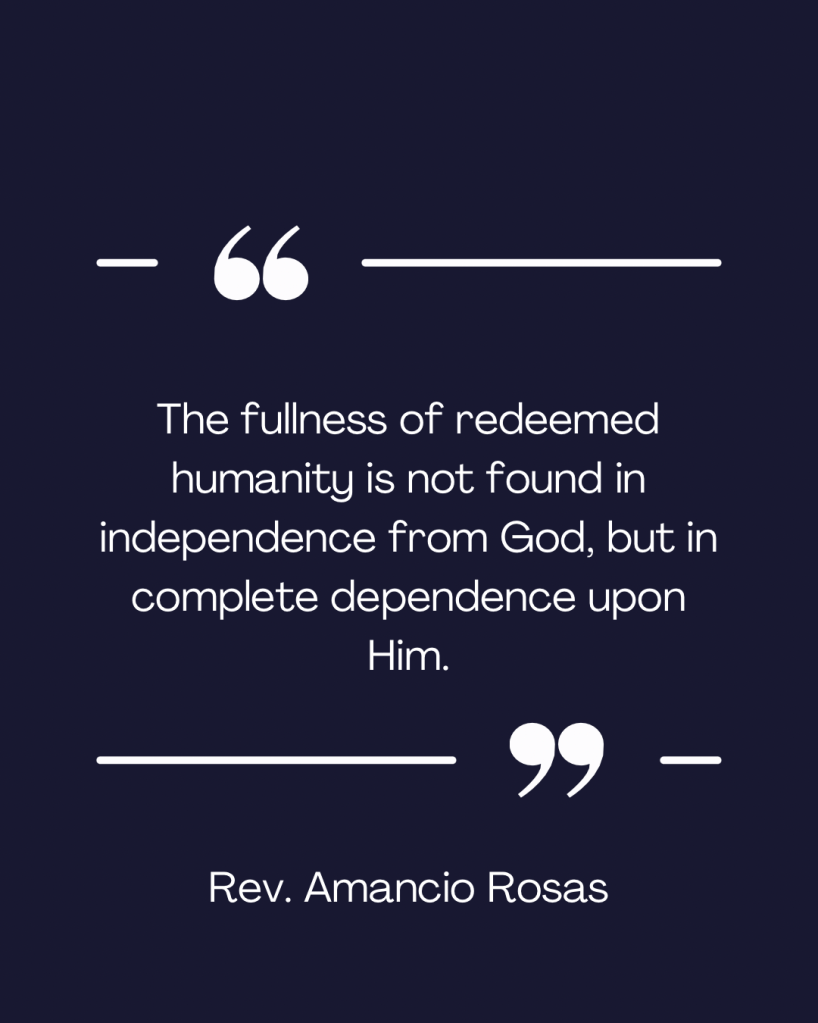
The fullness of redeemed humanity is not found in independence from God, but in complete dependence upon Him.
Rather than measuring humanity’s fulfillment solely through what we accomplish, we should consider how faithfully our lives participate in Christ’s continuing mission.
The Holy Spirit: Transforming Humanity from the Inside Out
My understanding of humanity’s fullness is holistic.
Throughout Christian history, theologians have examined the nature of humanity through distinctions such as body and soul, or body, soul, and spirit.
While these discussions have theological importance, I believe understanding humanity requires more than identifying its constituent parts.
Humanity must also be understood through its relationship with God, its original calling, and its continuing transformation.
This is where pneumatology, the doctrine of the Holy Spirit, becomes essential.
Second Corinthians 3:18 describes believers being transformed into Christ’s image through the work of the Spirit.
The transformation Paul describes is not merely external conformity to religious practices. It involves the renewal of the whole person.
Our desires, thoughts, attitudes, relationships, decisions, and conduct are gradually shaped through the Spirit’s sanctifying work.
Romans 12:1–2 connects the offering of our bodies to God with the renewing of our minds. Sanctification involves our entire existence, not simply an isolated spiritual experience.
From my Pentecostal perspective, this is particularly significant.
The Holy Spirit is not merely an abstract theological concept but the divine person who indwells believers, empowers Christian witness, distributes spiritual gifts, and transforms our character.
Acts 1:8 reveals the Spirit’s empowering presence for participation in Christ’s mission.
Galatians 5:22–23 demonstrates the character the Spirit produces within believers.
We cannot separate the Spirit’s power from the Spirit’s transforming work.
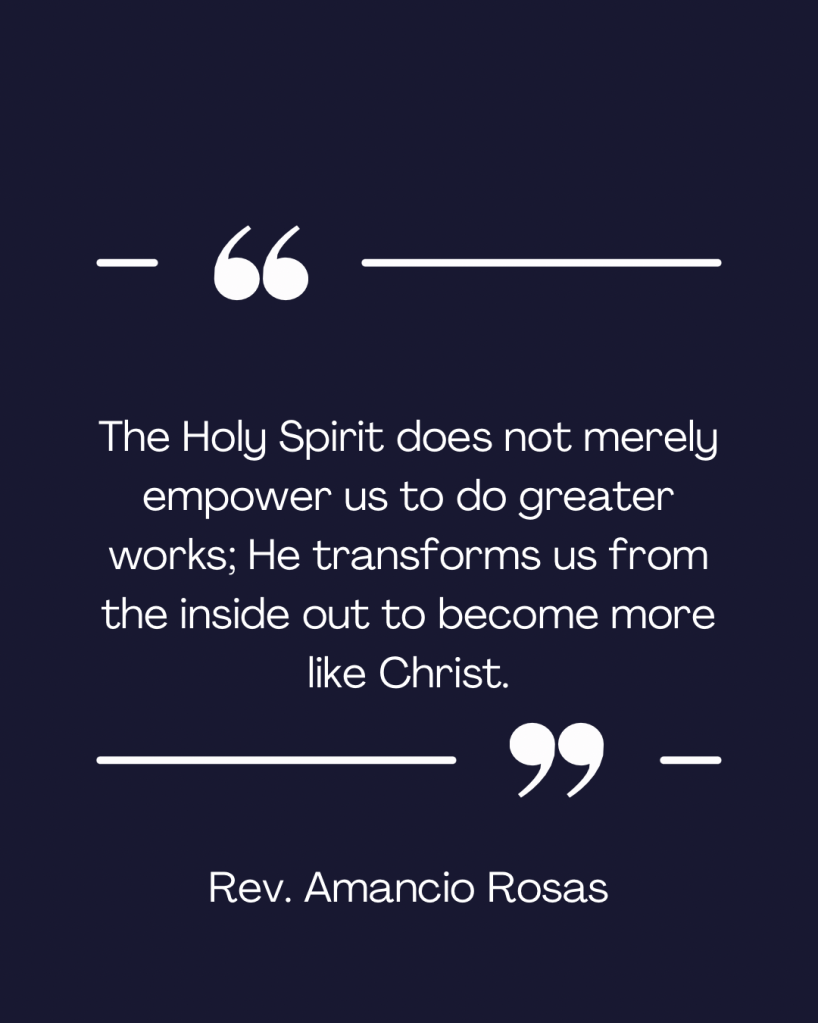
To be shaped into Christlikeness is not simply to accomplish greater works for God, but to grow in communion with Him while allowing His Spirit to transform how we live.
Yet this process is not always linear.
We experience weakness, failure, repentance, and renewal. Spiritual maturity does not make us independent of grace; it should deepen our recognition of our continual dependence upon God.
And although we experience transformation now, our ultimate fulfillment awaits the resurrection and glorification promised through Jesus Christ.
The Trinity: Unity Without the Elimination of Diversity
Returning to Seddon’s article, one of his most thought-provoking arguments involves the Trinity.
He observes that the Father, Son, and Holy Spirit possess distinct personal identities without compromising their divine unity.
Seddon uses this theological reality to explore how unity and diversity might contribute to our understanding of the Image of God.
I appreciate his recognition that unity does not require the elimination of distinction.
However, I would take this observation in a further Christ-centered direction.
I believe diversity is not the ultimate foundation of redeemed humanity’s unity. Jesus Christ is.
Through Christ, the Holy Spirit brings believers into fellowship with God and with one another.
Galatians 3:28 teaches that distinctions between Jew and Gentile, slave and free, and male and female do not determine our standing in Christ.
This does not mean that cultural backgrounds, personal identities, and individual experiences disappear.
Rather, these differences no longer establish superiority or inferiority within the redeemed community.
First Corinthians 12 illustrates this through Paul’s description of the church as one body with many members.
Each member has a distinct function, yet all belong to the same body under Christ.
The Trinity provides a meaningful analogy for unity without uniformity, although we must remember that the eternal unity of the divine persons is not identical to the unity of created human beings.
Nevertheless, the analogy invites us to reflect on God’s relational purposes.
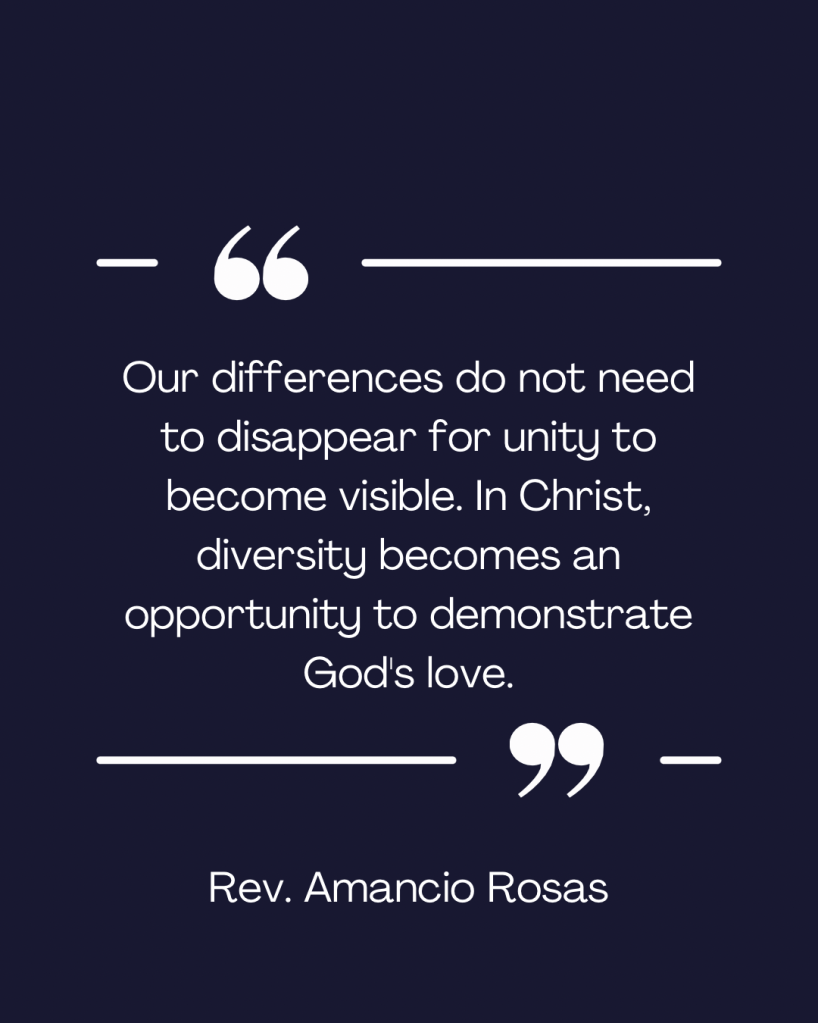
Our differences do not need to disappear for unity to become visible.
In fact, the shared life of believers from different backgrounds can demonstrate the reconciling power of Jesus Christ.
This led me to another important distinction.
Every individual fully possesses the dignity of being made in God’s image. Yet the relational dimensions of God’s purposes can become more visible when people live together in genuine love, service, humility, and unity.
Community does not make us more fully human than individuals who live apart from it. Rather, communal relationships provide opportunities to demonstrate aspects of God’s character that cannot be expressed through isolated individualism alone.
John 17:20–23 reveals Jesus praying for the unity of His followers so that the world may recognize the Father’s mission in sending the Son.
The church, therefore, is not simply a gathering of individuals who share theological beliefs.
It is called to become a community through which God’s love and reconciling work are made visible.
Diversity is not the enemy of unity. Under the lordship of Christ, it can become an opportunity to demonstrate the beauty of God’s redemptive work.
The Mystery of God: Theology with Humility
Another realization from this study concerns the limitations of human theological understanding.
The more I examine humanity’s relationship with God, the more I recognize that our understanding of His purposes remains incomplete.
God has graciously revealed Himself through Scripture and supremely through Jesus Christ. Nevertheless, our comprehension of His infinite nature remains limited.
Deuteronomy 29:29 reminds us that some things belong to God, while what He has revealed carries responsibilities for His people.
First Corinthians 13:12 reminds us that our present knowledge remains partial.
I believe this should shape the way we approach theological scholarship.
Studying theology is not about mastering every mystery of God. It is about faithfully seeking to understand what He has revealed while remaining humble about what we do not yet know.
This is also why dialogue between theology and other academic disciplines can be valuable.
Scientific study can raise meaningful questions about the natural world and human existence. Theology considers those questions in relationship to divine revelation and Christian doctrine.
We should examine evidence carefully without assuming every philosophical conclusion drawn from that evidence must be accepted.
Likewise, we should approach difficult questions with intellectual honesty rather than allowing our current understanding to prevent further investigation.
For me, the pursuit of theology should deepen both conviction and humility.
Living the Fullness of Redeemed Humanity
As I reflect on everything this article has prompted me to consider, I return to a central conviction.
Humanity was created in God’s image. Sin damaged our relationship with our Creator but did not erase our God-given dignity.
Through Jesus Christ, we are offered reconciliation with God and a transformed way of life.
The Holy Spirit progressively shapes believers into Christlikeness, not merely for individual spiritual development but for participation in God’s continuing mission.
And through the fellowship of believers, our different backgrounds, gifts, experiences, and callings can become opportunities to make God’s love and relational purposes visible.
For those of us involved in Christian ministry, this carries practical responsibilities.
Our calling is not simply to develop successful programs, communicate theological information, or achieve measurable ministry outcomes.
We are called to help people grow in their relationship with Jesus Christ, become increasingly responsive to the Holy Spirit, and learn to love and serve others faithfully.
The measure of spiritual maturity cannot be reduced to knowledge, talent, influence, or accomplishment.
It must also include the character of Christ being formed within us.
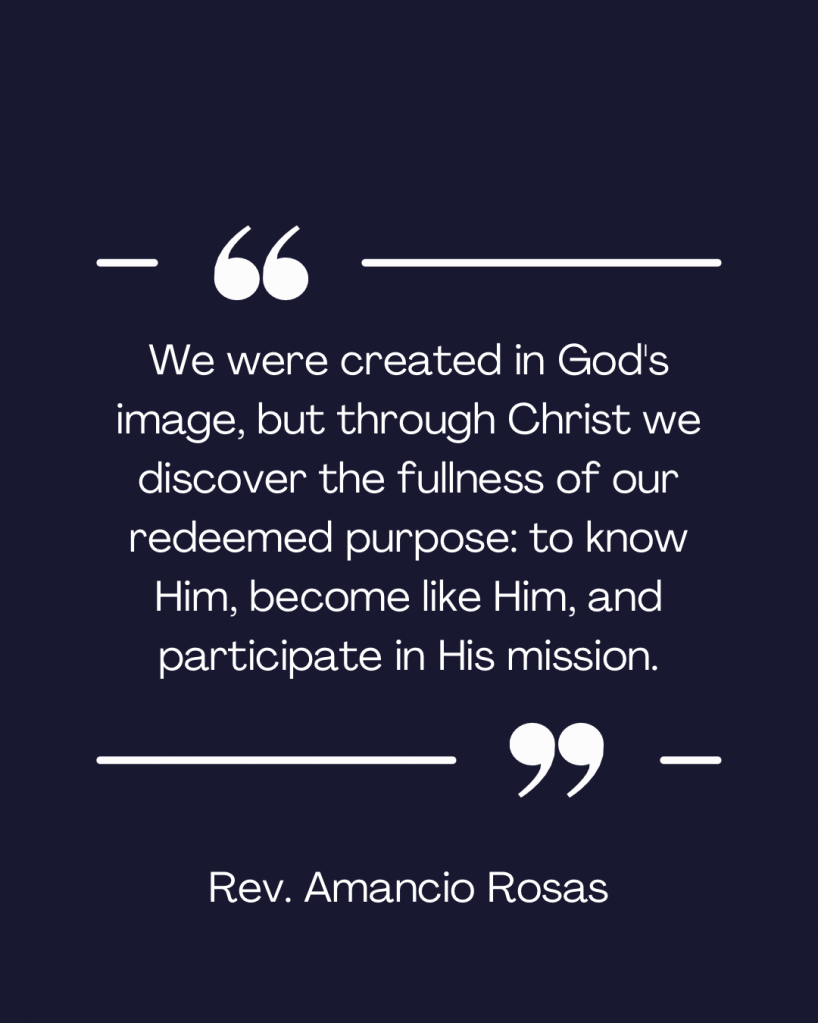
Ultimately, I believe the fullness of redeemed humanity is not found simply in what we become through our own progress, but in whom we belong to, whose likeness we are being transformed into, and whose mission we are privileged to participate in.
We were created in God’s image.
We are called into communion with Him through Jesus Christ.
We are transformed through the Holy Spirit.
And one day, God’s redemptive work will reach its fulfillment in the resurrection.
Until then, we continue growing, learning, serving, and discovering the depth of what it means to live faithfully before our Creator.
Not independently of Him, but entirely dependent upon Him.
The fullness of redeemed humanity begins and ends with Jesus Christ.
Scripture for Further Reflection
Genesis 1:26–27; Genesis 3; John 14:12–17; John 15:5; John 17:20–23; Romans 8:29; 1 Corinthians 12:12–27; 1 Corinthians 15:45–49; 2 Corinthians 3:18; Galatians 3:28; Colossians 1:15.
Reflection Questions
- How does recognizing every person as created in God’s image affect the way we treat others?
- What is the difference between human advancement and genuine spiritual transformation?
- How can our different gifts, backgrounds, and experiences make God’s love more visible within the church?
- In what areas of our lives might the Holy Spirit be calling us to deeper dependence upon Jesus Christ?
Article That Inspired This Reflection
Seddon, Matthew T. “Toward an Anthropologically Engaged Theology: Implications from Human Evolution for Theological Anthropology.” Anglican Theological Review 105, no. 4 (2023): 409–423. https://doi.org/10.1177/00033286231215300
This reflection represents my personal engagement with the article from a Christ-centered Pentecostal theological perspective. The conclusions presented are my own and should not be understood as a summary of Seddon’s theological position.