Leadership is often tested in two very different situations: how we respond when people criticize us and how we respond when people need us. While reading Harold Myra and Marshall Shelley’s The Leadership Secrets of Billy Graham, these two areas stood out to me because they connect directly with what I am learning in my present leadership roles.
Billy Graham’s example reminds me that leadership is not simply about having influence. It is about developing the character necessary to handle that influence well.
Learning to Love Harsh Critics
One statement from the book especially challenged me:
“When criticism is a threat, a leader becomes defensive, but when it is viewed as a natural occurrence and a challenge, it can become a source of constructive energy.”
Criticism is unavoidable in leadership. The question is not whether people will criticize us, but what we will allow criticism to produce within us.
Throughout my ministerial journey, I have experienced criticism concerning my abilities, leadership, calling, and even character. I have learned that criticism does not have to determine my identity, but it can contribute to my development.
There have been people who did not believe I could go further in my calling. Instead of allowing those opinions to stop me, I have used them as motivation to pursue God more deeply and allow Him to have the final say concerning where He wants me to go.
Criticism concerning character requires an even different response. Rather than immediately becoming defensive, I have learned the importance of having conversations, listening to the concerns of others, and evaluating whether there are areas in my life that genuinely need improvement.
That does not mean every criticism is correct.
It means I want to be secure enough that criticism does not control me while remaining humble enough to learn when there is truth within it.
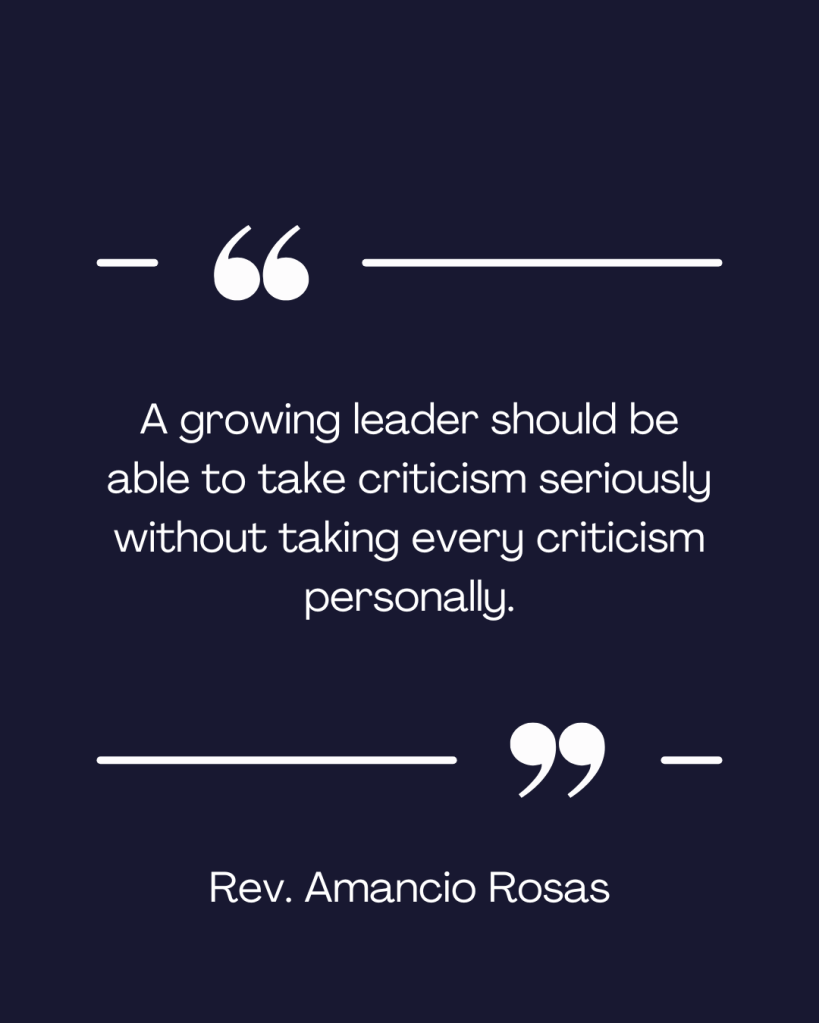
A growing leader should be able to take criticism seriously without taking every criticism personally.
Leading Through Love
Another lesson that resonated with me was Graham’s emphasis on leading through love. Myra and Shelley write:
“Sometimes love is shown by a thoughtful word, by willingness to help an employee in trouble or by refusal to retaliate when attacked; other times love is shown by simply showing up.”
This challenged me to think about leadership beyond positions, titles, and responsibilities.
Sometimes leadership is simply showing up.
In my current role working for a nonprofit youth organization, I have opportunities to mentor young people, but leadership also happens behind the scenes. I try to help with administrative responsibilities, complete smaller tasks that need attention, and assist my team when deadlines are approaching.
These actions may seem insignificant, but service can influence culture.
As I continued helping in these areas, my manager eventually began implementing rotations that encouraged other staff members to contribute in similar ways. What began as simply trying to help became an opportunity to influence how our team serves one another.
That experience reminded me that leadership culture is not shaped only through instructions. Sometimes culture is shaped through example.
Leadership Without Recognition
There is also an important distinction between serving others and using service as a way of gaining recognition.
Christian leadership cannot simply ask, What will make me look like a good leader?
Instead, we should ask, How can I genuinely help the people God has placed around me?
Jesus modeled leadership through service. Leadership rooted in love does not always need acknowledgment. Sometimes it means completing the unnoticed task, encouraging someone who is struggling, helping a coworker, mentoring a young person, or simply being present when someone needs support.
Our actions can communicate love before our leadership position ever does.
Becoming the Leader God Is Forming
These two lessons from Billy Graham complement each other.
Criticism develops something within the leader, while love expresses something through the leader.
Criticism can develop humility, self-awareness, perseverance, and maturity. Love then allows those qualities to become visible through service toward others.
I am continuing to learn that leadership development is not merely about becoming more influential. It is about becoming the kind of person who can steward influence faithfully.
I want to become a leader who can receive criticism without immediately becoming defensive, evaluate myself honestly, continue pursuing God’s calling despite opposition, and serve people without needing recognition.
Ultimately, leadership is not only about where we lead people.
It is also about who we are becoming while we lead them.