Categories
Educational Journey

Theology In Action | Book Critique

Introduction:

A Little Book for New Theologians by Kelly M. Kapic introduces the study of theology. He discusses why it is essential to consider studying theology as a foundation of adventure when it comes to our faith. The author provides the invitation to know God and establishes disciplines to engage with God. The importance of theology is the uttermost goal for the believer and their view of God. Without our view about the characteristics of our Maker, how can we, as believers, reflect His image? We must submerge ourselves with theology as not just head knowledge but transformational application to impact those around us. The author then provides expressions that theologians can implement to increase their pursuit of theology as a living impact instead of an informational asset. He uses the importance of spiritual disciplines and qualities to guide the reader into applying these principles.


Life Experiences:

I have seen first-hand how theology is expressed throughout my life and ministry. Without the proper knowledge and understanding, how can we as believers live this Christian life without first having an excellent theological framework? I was curious about theology and always wanted to go deeper inmy biblical reading and to know more profound concepts. I was a junior in high school and found course material explaining deep soteriology concepts, which helped me regarding my faith in Christ. Knowing what Jesus has done through His sacrifice allowed me to express the freedom of sin based on my joy and hope through my witness and testimony. The author states, “Yet in the complex relationship between life and theology, we should admit that for good or ill, our experience and practice grow out of our theology but also inform it.” Our experience and practice paint a picture of our theology through the canvas of our lives. We are called to be the world’s light, people who are called to bear fruit and to fan the flame of our practice. When we do not have a proper understanding of theology and its implications, it’s easy for people to keep committing sins and not renewing their minds. Christians are more concerned with the world and placing judgment when they forget that we are responsible for Christians than outsiders. When we allow sins to become habits, it paints a picture of others regarding our theology and that it needs to be challenged and changed. Theology informs our actions, and we must allow the Holy Spirit to change our thinking.


Prayer As Foundational:

​I appreciate the author’s perspective when it came to prayer and the importance it has for the theologian. Prayer, by its implications, is talking to God. This discipline should be the foundational standard for anything we say and do. Does this mean I disagree with other ways to encounter God through other means of spiritual disciplines? I believe prayer is established for communion with God, while other disciplines play a part in renewal, but prayer brings vulnerability. The author states, “How sad for us to speak of God often, yet neglect our communion with Him.” There is a dilemma where we can speak of God often yet neglect the personal time to commit to Him through prayer. The author then talks about how there is no substitute for prayer, and we can go through our lives speaking and learning about God that neglect knowing God. You can learn about someone and speak about them through informational means. There is a difference when you see the individual based on communion compared to just learning and hearing about the individual.

​When it comes to studying, as that is the theologian’s task, the author clarifies that there is a battle between study and prayer. Studying is important because we need to understand the Bible and the overall story of the interactions between God and Man. But my objection is, what is the difference between an unbeliever reading and learning the Bible? They may have a different point of view through their investigation of biblical accounts, but the differences come with their focus. Prayer highlights and separates us because we know the author based on personal means. In contrast, the unbelievers just investigate the biblical accounts based on knowledge and learning. Therefore, I agree that Studying and Prayer must both be pursued, and there should not be a battle between their importance. We should see both as complementary in our goal of Knowing God as theologians.


The Humbling Perspective:

While going through my bachelor’s degree, I have seen different varieties of perspectives and principles when it comes to understanding biblical text. We can get caught up with other points of view that we tend to lose ourselves and the convictions of our understanding and upbringing regarding our background. The author discusses the importance of tradition and community, which builds on understanding theology. I believe that we can learn from other theological circles, even throughdisagreements. Depending on the theologian, this comes to understanding the primary and secondary issues debated on and established to cut ties. If salvation is grace through faith, that is how simple it is. When we add conditions to how to get saved, we are guilty of legalism. If we have this perspective of having the “living tradition,” then I believe that is adding legalism based on the belief of tradition. The author states, “This tradition shapes me in untold ways, and I am thankful for it. But this is a living tradition, not a dead one.” The context of this quote stems from how all traditions are not valid and how he is a living tradition. I think tradition is human-based, which has been promoted and passed along just like Judaism through oral tradition. There have been books that are against his tradition, and rightly so; other traditions have their dark side based on their representation and theological concepts. We are not saved based on our traditional perspective or rightful thinking theology; it is our faith in Christ that is sustained through what He has done on the cross, regardless of secondary theological beliefs that are expressed. Just because there are different theological perspectives like baptism, which can be summed up through immersion, sprinkling, or even plunging babies underwater like some Christian denominations, doesn’t mean they are not saved because baptism isn’t required for salvation. 


Example Leads Knowledge:

One principle I plan on applying to my life is the example of Augustine when it came to his theological pursuit. Humanity’s effects come with our ineffective understanding of everything demonstrated through theology since we are not omnipotent. This should help us be humble through our pursuit of theology, even if others disagree with our conclusions. I love that Augustine also corrected his own theological conclusions, which provides an example that we must fix our theology based on our investigation and practice. The author states, “While Augustine is commonly considered the father of Western orthodox Christianity, he never saw his conclusions as indisputable.” Since I am human and will mess up because of sinfulness. I want to set a humble example that my conclusions are disputable. I am willing to accept, correct, and understand this journey of theology.

Categories
Educational Journey Luke and Acts

Exegetical Paper on Acts 19:1-7 (A Pentecostal and Non-Pentecostal Perspective)

Introduction and Survey:

This exegetical paper is about Acts 19:1-7 which is the encounter of Paul and the Ephesian believers. My purpose in writing this paper is to provide a balanced view when it comes to Non-Pentecostal and Pentecostal theologies about this encounter. I have seen a constant debate about the uniqueness of salvation compared to Spirit Baptism according to Pentecostal theology when it comes to interpreting this text. I come from an Assemblies of God perspective which differs from other Pentecostals regarding speaking in tongues. The Initial Physical Evidence in speaking in tongues has always been a challenge for Non-Pentecostal to accept based on our perspective and connections that we find throughout Scripture. As an Assemblies of God minister our theology states that this is a “subsequent and distinct experience” regarding Baptism In The Holy Spirit while Tongues is viewed more of the “means of grace” and not based on the requirement of salvation according to other Pentecostal groups.[1] Throughout Christian Theology we tend to use terminology that isn’t spelled out in the Bible.

So it’s appropriate for me to include the argument to prove validation. I have seen arguments about how this was a specific salvation occurrence, but we see a repeated pattern of tongues throughout the Book of Acts. So I will present a Pentecostal Perspective but also engage on critics that are opposed to it. People tend to just follow the commentaries or bible teachers based on their tradition instead of engaging those who have questions and critiques about what they truly believe. Depending on the perspectives of their theology based on Christology and Pneumatology is where the real battle is fought. Christ is seated on the right hand of God who commanded the Holy Spirit to be with us. The Holy Spirit plays a major part which I believe the critics tend to lessen His involvement based on illumination of Scripture alone.

Text:

While Apollos was at Corinth, Paul took the road through the interior and arrived at Ephesus. There he found some disciples 2 and asked them, “Did you receive the Holy Spirit when you believed?” They answered, “No, we have not even heard that there is a Holy Spirit.” 3 So Paul asked, “Then what baptism did you receive?” “John’s baptism,” they replied. 4 Paul said, “John’s baptism was a baptism of repentance. He told the people to believe in the one coming after him, that is, in Jesus.” 5 On hearing this, they were baptized in the name of the Lord Jesus. 6 When Paul placed his hands on them, the Holy Spirit came on them, and they spoke in tongues and prophesied. 7 There were about twelve men in all. Acts 19:1-7

Contextual Analysis:

The author of the Book of Acts is attributed to Luke. When if the Book doesn’t state the author there is a hint regarding the author when it comes to addressing Theophilus. (Acts 1:1) When reading the beginning of the Book of Luke we see the same person being addressed when it came to this gospel to Theophilus (Luke 1:1) It is easy to conclude that Luke is the author of Acts based on this observation. Many observations can also be stated when it comes to authorship. Stanley M. Horton provides church fathers as confirmation regarding Luke being the author compared to other scholars in their perspective of Acts. He states that “The Muratorian Canon attributes them to Luke the physician, as did Irenaeus and many of the early church fathers.”[2] C Peter Wagner provides more current biblical scholars’ approaches to Luke’s scholarship. He stated that “Luke was well educated and cultured. Biblical scholars agree that he was “a man possessed of remarkable literary skill, with a fine sense of form and a beautiful style.” He was exceptionally well qualified to write these two historical books. Edmund Hiebert describes him as “a competent scholar and first-rate literary historian.… His work was characterized by comprehensiveness, thoroughness, accuracy, and orderliness.”[3] Having both early church fathers and current scholars both confirm that the authorship is Luke regarding the Book of Acts.

There have been many discussions about the title of the Book of Acts. Some simply just agree with the title Acts with others like to add the apostles’ names because they have confirmed the acts in the text. Pentecostals decided that due to the Holy Spirit being mentioned throughout the Book of Acts and they are used by the Holy Spirit to perform these Acts then is reasonable to conclude that this would be a realistic title. “What, then, is the correct title for Luke’s second volume? Its popular name, especially in the United States, is ‘the Book of Acts, and this is justified by the fourth-century Codex Sinaiticus in which it is headed simply Praxis, ‘Acts’. But this neither tells us whose acts Luke is portraying nor helps to distinguish his book from the later apocryphal works like the second-century has been ‘The Acts of (the) Apostles’, with or without the definite article. Yet this title is too man-centered; it omits the divine power by which the apostles spoke and acted. Others have proposed the title ‘The Acts of the Holy Spirit, for example, Johann Albrecht Bengel in the eighteenth century. He wrote that Luke’s second volume ‘describes not so much the Acts of the Apostles as the Acts of the Holy Spirit, even as the former treatise contains the Acts of Jesus Christ.”[4]

The Date of Acts can be confirmed by the destruction of Jerusalem in AD 70. Walter A. Elwell states that “It was probability written no later than the early 60s when Paul was under house arrest in Rome awaiting trial. This is the time, At any rate when Acts concludes.”[5] Having that statement eliminates the dogma of a perfect date regarding when Acts was written. Scholars may differ on different dates but it’s good to make assumptions that show the humility of different commenters not having a specific answer.

To conclude this segment in the account of Acts 19:1-7. It’s important to see that the context by looking at the historical and the contextual to conclude a balanced view of what was the outcome of the Ephesians believers. Can both salvation and the Baptism of the Spirit be connected with tongues like other accounts not based on salvation but based on evidence that should be sought after?

Formal Analysis:

There are many views when it comes to the themes throughout the Book of Acts. The Main Point is based on Acts 1:8 which is mentioned through many of these resources. John Stott provides multiple themes that can be summed up when it comes to this specific Book. He states that “I have tried, therefore, to address myself with integrity to some of the main questions which the Acts raise for today’s Christians, such as the baptism of the Spirit and charismatic gifts, signs, and wonders, the economic sharing of the first Christian community in Jerusalem, church discipline, the diversity of ministries, Christian conversion, racial prejudice, missionary principles, the cost of Christian unity, motives and methods in evangelism, the call to suffer for Christ, church, and state, and divine providence.”[6] George O Wood provides four statements of the themes of Acts based on how Acts interacts with the content. He states that “Acts bridges the Gospels and Paul’s Letter, Acts Traces the Growth of the Church, Acts Guides Faith, and Apologetics, Acts Emphasize The Holy Spirit for Witnessing”[7] Stanley Horton states that “We too can see in Acts a new way for us to live in relationship to the Lord, the Church, and the Holy Spirit. It will affect our values and help us be disciples who claim God’s promises and bring Christ glory.”[8]

A Pentecostal Perspective provides a theme based on the evidence of speaking in tongues through the Book of Acts. According to many authors from the Assemblies of God Correspondence School, they stated that “Just before His ascension, Jesus’ final promise to His disciples was, “You will receive power when the Holy Spirit comes on you” (Acts 1:8). We see that promise fulfilled throughout Acts where the Holy Spirit gave believers the power to witness and work for Christ. Acts record five times in which various believers were filled with the Holy Spirit and explain the outward evidence that this had occurred” The Day of Pentecost (2:1–4): All 120 people spoke in new languages as soon as they were filled with the Holy Spirit. Believers at Samaria (8:14–19): When he saw the evidence of the Spirit, Simon the sorcerer offered money in the hope of experiencing it himself. Saul’s conversion and filling (9:17–19): We know that Paul often spoke privately in unknown languages (1 Corinthians 14:18). At Cornelius’ home (10:44–46): They spoke in new languages. Believers at Ephesus (19:1–7): They spoke in new languages and prophesied. [9] There are so many complex themes within the Book of Acts that is good to highlight and know when we are taking an account the whole book.

Acts is a historical narrative that has its type of interpretation. People differ on theology based on interpreting themes, but we see Paul using narratives to create doctrines. (Romans 4:1-11) So when It comes to Pentecostals and their view of Baptism In The Holy Spirit and the Initial Physical Evidence in Speaking In Tongues can be supported by Paul’s statement demonstrating theology and doctrine. Terminology titles like “Trinity” is not found in the bible but Trinitarians believe the concept is demonstrated and was confirmed by the Council of Nicea in 325. As Pentecostals, we take that same approach that even if the terminology of Initial Physical Evidence Of Speaking In Tongues is not in scripture the concept can be found throughout the Book of Acts.

Detailed Analysis and Synthesis

            In the next following segment of this paper, I will be providing Non-Pentecostal and Pentecostal sources regarding Acts 19:1-7. Having both perspectives will provide a balance and a great overview of how this interpretation may vary. While certain people may want to just use their tradition to confirm their theology it’s best to avoid single-sided investigation.

Acts 19:1-2

Based on a Non-Pentecostal Lens there is complexity when it comes to the believers in this verse. There are different views about the believers and who they are followers of. Something is missing with these believers since Paul asked if they have received the Holy Spirit since they have received. This indicates that these believers believe in something or someone. The main emphasis is the Holy Spirit in this text. There are a variety of opinions about these disciples. Wagner states that “, we can see clearly that these 12 were disciples of Apollos. E. M. Blaiklock agrees, saying, “Perhaps they were a remnant of Apollos’ less-mature ministry in the city.” But were they true believers? The usual way Luke uses the word “disciples” from the Greek mathetai means what we call born again “Christians.” But could they be real Christians without being baptized in the name of Jesus and without knowing anything about the Holy Spirit?[10] Apollos may be the one who had these disciples but were they ignorant of the teachings of Christ? According to Stott John, He states that “they were disciples of John the Baptist, and were decidedly less well informed than Apollos had been. This incident has become a proof text in some Pentecostal and charismatic circles, especially when the inaccurate and unwarranted av translation of verse 2 is followed, namely ‘Have ye received the Holy Ghost since ye believed?’ From this, it is sometimes argued that Christian initiation is in two stages, beginning with faith and conversion, and followed later by receiving the Holy Spirit. [11]

We have two concluding factors is it either Apollos or John’s disciples? There may be a mixed feeling about who they are and what they believed but it seems to me that based on their location and the timeframe of the Book of Acts they were disciples. According to Walter A Elwell, He states “After only a short time in Antioch, Paul began a third swing through “Galatia and Phrygia strengthening all the disciples”[12] This is Pauls’ third swing which means Paul has encountered the disciples whether they are Apollos or John’s we can conclude that they were disciples and not just pretending to be one. According to John, he stated that Pentecostals use Paul’s statement in verse 2 to confirm that there is a two-stage outcome in this text.

According to Pentecostal Perspective regarding context Apollos was being instructed about Jesus even if he knew John’s baptism (Acts 18:26) Where Pentecostal and Non-Pentecostal differ is the word disciples. Standley Horton states that “everywhere else in the Book of Acts where Luke mentions disciples he always means disciples of Jesus, believers in Jesus, followers of Jesus.” [13] To answer John’s statement about the “Baptism” a lot is aimed towards the Greek. Without knowing Greek it is hard to be able to have a clear graph of what is going on throughout the passage. This is confirmed by two more statements about this specific problem. Horton states that “Contemporary versions generally take this to mean “when they believed.” But the Greek is literally, “having believed, did you receive?” The “believing” is a Greek aorist (past) participle, while “receive” is the main verb (also in the aorist). Since the tense of the participle often shows its time relation to the main verb, the fact that “believing” is in the past tense was taken by the King James Version translators to mean that it preceded the receiving.[14] He also states that “That is why the King James translators, as good Greek scholars, translated the participle “since ye believed.” They wanted to bring out that the believing must take place before the receiving. This also brings out the fact that baptism in the Holy Spirit is a distinct experience following conversion.[15] William also confirms this by stating that to put it positively, Luke describes the gift of the Spirit exclusively in charismatic terms as the source of power for effective witnesses.[16]

There is a mixture of problems regarding what people think these disciples are and who they are following. Luke when it comes to terminology is clear that a disciple is a disciple of Christ if it was another disciple it would have stated which individual it was since it is also mentioned through the Book of Luke. Translations matter when it comes to finding out the Greek since now different translations have their theological bend. Without learning about the importance of the nuances of the language it’s easy to make assumptions about a text.

Acts 19:3-4

When it comes to the non-Pentecostal perspective there is a lot of diversity about questioning the baptism and the purpose behind it when it came with these Ephesians Believers.

According to Stott, He stated that “They explained that they had received John’s baptism, not Christian baptism. In a word, they were still living in the Old Testament which culminated with John the Baptist. They understood neither that the new age had been ushered in by Jesus, nor that those who believe in him and are baptized into him receive the distinctive blessing of the new age, the indwelling Spirit.[17] Another statement made by Marshall states “This confession shows that the men were followers of John the Baptist but knew something about Jesus. Somehow knowledge of Jesus separate from the Christian message about his resurrection and outpouring of the Spirit seems to have spread to Ephesus and probably elsewhere.[18] This brings us to the conclusion that just because someone heard about Jesus doesn’t mean they are true followers. The following perspective provides a different outlook when it comes to these believers and their take on their baptism.

Is there some discredit of the belief of Christ based on just knowing? Many don’t consider the salvation prayer a specific way to be saved. The main point in the Pentecostal perspective is that something was missing in their lives. They know about Jesus but have they submitted to His lordship? George Wood states “The twelve men had believed, and Paul baptized them in water. Who can deny that they were Christians at that point? But something was missing in their lives.”[19] While Stanley Horton states that “John himself told the people that they should believe in the Coming One, Jesus. This means, of course, that they would not only accept Him as Messiah and Savior but also obey Him, following His directions to ask for and receive the Spirit[20] With both of these opposing views it’s easy to fall into the trap how questioning their belief based on the background they have received teaching wise.

According to the legitimate of salvation, the most common statement about it is that it is by grace and faith alone. It seems like from the non-Pentecostal perspective they must be baptized to be real believers, but that would be in contrast to salvation and would mean they are adding works in the equation to prove their statements. While the Pentecostal view admits that they know about Jesus and most likely follow Him but baptism is the next step to make it a sign that they are now worshipping and serving Him.

Acts 19:5-7

            The last few verses are where a lot of controversy starts when it comes to the sequence of this experience. Some may call it unique while others are a normative experience for Christian life. Based on the perspective of non-Pentecostals they provide a thesis that this is a unique situation that isn’t repeated in scripture. Some may state that if they spoke and prophesied that was the interpretation which comes from the camp that was to go word by word isn’t that case. Regarding the point of view of these 3 verses, it’s important to look a the context of the rest of the passage.

            Non Pentecostals view the pouring of the Spirit as a unique case based on the mentioning of tongues and prophecy. John Macarthur who is against charismatics stated “The resulting message can be translated and thereby understood referring to Acts 19:6, either by those who already know the language (as on the day of Pentecost – Acts 2:9) or by someone gifted with the ability to translate (1 Cor 12:10, 14:5, 13)[21] John MacArthur only provides only two possibilities which are the language is known or someone can translate when it came to Acts 19:6. There are some issues when it comes to the laying on of hands. John Stott states that “The laying-on of apostolic hands, however, together with tongue-speaking and prophesying, were special to Ephesus, as to Samaria, to demonstrate visibly and publicly that particular groups were incorporated into Christ by the Spirit; the New Testament does not universalize them. There are no Samaritans or disciples of John the Baptist left in the world today.”[22] This was a unique sign for the two instances that have been to confirm the acceptance of Christ. There’s another view that these people needed extra signs to know that they are adopted to God’s family. According to Marshall, he states “It is clear from the other stories of conversion in Acts that such manifestations took place spasmodically and were not the general rule (8:17 note; 8:39; 13:52; 16:34); in the present case some unusual gift was perhaps needed to convince this group of ‘semi-Christians’ that they were now full members of Christ’s church.[23] We see different objections about the function of tongues, the laying on of hands, and the uniqueness of this account.

            The Pentecostal Perspective offers not just salvation only type of uniqueness of the situations but and salvation and pneumatology opinion. James Dunn wrote his thesis against the Baptism of the Holy Spirit and how it is only limited to just that moment. William states that following “Again Dunn queries, “Why should it be assumed that Luke thinks of the Spirit only as of the power of inspiration?” And again, this time answering his question, “There is surely a danger here of being so struck with the visible effects of the Spirit’s coming in Luke-Acts that one diminishes Luke’s pneumatology to such effects.” The overview of this is stating that while only focus as the Holy Spirit being able to illumine scripture and not have any other involvement in the early believers. When it comes to laying on of hands there is a different way of viewing this type of practice besides ordination.

According to Horton, he states “It is better here also to take the laying on of hands as a means of encouraging their faith and as preceding or at least distinct from the coming of the Spirit. Then, probably to emphasize that these disciples had now received the full experience of the baptism in the Spirit, Luke states that they spoke in tongues and prophesied. (The Greek also seems to imply that they continued to do so.)[24] George wood provides his insights by stating that “Though Luke does not say “other” tongues here, it is the same gift as was given on the Day of Pentecost and exercised in the Corinthian Church. Then the speaking in tongues gave them further assurance that the Holy Spirit’s presence and power were real. That they also prophesied indicates they were energized by the Spirit to build up and encourage the group.[25] Based on the following statements it’s easy to conclude that the Holy Spirit isn’t just an illumination agent but speaks in tongues and stayed speaking in tongues. Prophesied in this statement means prophecy and not interpretation so it concludes that there wasn’t a need for interpretation in this instance. The main purpose is being built up and encouraged by the Spirit.

Reflection:

            Based on my investigation throughout this scripture and the different theological tend of Non-Pentecostal and Pentecostal lenses there is a lot of discovery and implications that must be noted. When it comes to Acts 19:1 there is a lot of comments about who the believers are the conclusion is maybe Apollos Or John’s disciples. Based on another source Paul’s main mission is to encourage and build believers so the assumption of these believers knowing Christ is valid in my opinions while another states that they were arrogant based on their whereabouts. The Holy Spirit is emphasized as received when you believed. Based on the issues of translations there has been a lot of debate based on verse 2. Regarding the different status of this verse, it’s easy to conclude that translations are not always perfect and that regarding opinion it’s all based on the perception of the Ephesians believers.  According to Pentecostal comments Paul sensed noticed that something was missing with these believers not based on belief but based on the Holy Spirit’s power.

            When it comes to Acts 19:3-4  there is the emphasis on not being real believers and a lot of what I got from the non-Pentecostal perspective is that you may have the knowledge but you are not saved unless they are baptized. While the other view presents that they are already believers and that baptism was to serve the worship and service for Christ not for belief. Does the other view support salvation base on works to legitimatize the Ephesians Believers? I learned that it’s better to stay quiet when it comes to assuming the status of any believer and seeing the outcome of their actions. The Pentecostal view already acknowledges that they are already believers and that baptism was only for worship and service demonstration, not a salvation badge that must be required to be a believer.

Lastly, when it comes to Acts 19:5-7 there are the opinions of uniqueness or normative. The non-Pentecostal view concludes that it’s not a normative experience that it was unique because there is no longer those type of people living today. Another one is based on the usage and the purpose is no longer valid based on an interpretation. The laying of hands is also mentioned by only this unique instance because it’s not mentioned anywhere else. While Pentecostal states that the Holy Spirit is more than just the power of inspiration regarding the Bible but of power, encouragement, and gift. Paul mentioned the gift of the Spirit and goes back to their mini-Pentecost. If Pentecost was a unique and fulfilled event why was there another one? Why were there repeated accounts speaking in tongues moments including when Paul spoke later on throughout his ministry? I believe the issue isn’t based on the limitations of the Spirit but the lack of the study of the Spirit and what He can do for us today as believers.

Bibliography:

Ag.org. 2010. Assemblies of God (USA) Official Web Site | Baptism in the Holy Spirit. [online] Available at: <https://ag.org/Beliefs/Position-Papers/Baptism-in-the-Holy-Spirit&gt; [Accessed 15 December 2021].

Wood, George O. Acts: The Holy Spirit At Work In Believers. 3rd ed., Global University, 2010.

Horton, Stanley M. Acts: A Logion Press Commentary. 3rd ed., Gospel Publishing House, 2007.

Wanger, C. Peter. The Book Of Acts: A Commentary. 3rd ed., Regal, 2008.

W., Stott John R. The Message Of Acts: To The Ends Of The Earth. 1st ed., InterVaristy Press, 2020.

Marshall, I. Howard. Acts: An Introduction And Commentary. 2nd ed., Inter-Varsity Press / IVP Academic, 2008.

Elwell, W., 2013. Encountering the new testament – a historical and theological survey. 3rd ed. Grand Rapids MI: Bakers Publishing Group.

Menzies, W. and Menzies, R., 2011. Spirit and power. 1st ed. Grand Rapids, Mich.: Zondervan.

Horton, S. 2005. What the Bible says about the Holy Spirit. Springfield, Mo.: Gospel Pub. House.

MacArthur, J., 2013. Strange fire – the danger of offending the holy spirit with counterfeit wor. Nelson Books.

Adams, J., Barclift, M., Johns, D., McGhee, Q., Opperman, M. and Teague, W., 2010. New Testament Survey. 3rd ed. Springfield, Missouri, USA: Global University.


[1] Ag.org

[2] Horton, Stanley M. Acts: A Logion Press Commentary. 3rd ed., Gospel Publishing House, 2007.

PG 15

[3] Wanger, C. Peter. The Book Of Acts: A Commentary. 3rd ed., Regal, 2008. Pg. 18

[4] W., Stott John R. The Message Of Acts: To The Ends Of The Earth. 1st ed., InterVaristy Press, 2020.

Pg. 32-33

[5] Elwell, W., 2013. Encountering the new testament – a historical and theological survey. 3rd ed. Grand Rapids MI: Bakers Publishing Group. pg 195

[6] W., Stott John R. The Message Of Acts: To The Ends Of The Earth. 1st ed., InterVaristy Press, 2020.

Pg. 11

[7] Wood, George O. Acts: The Holy Spirit At Work In Believers. 3rd ed., Global University, 2010.

PG 17

[8] Horton, Stanley M. Acts: A Logion Press Commentary. 3rd ed., Gospel Publishing House, 2007.

Pg. 12

[9] Adams, J., Barclift, M., Johns, D., McGhee, Q., Opperman, M. and Teague, W., 2010. New Testament Survey. 3rd ed. Springfield, Missouri, USA: Global University. (67)

[10]Wanger, C. Peter. The Book Of Acts: A Commentary. 3rd ed., Regal, 2008. Pg. 425

[11]  W., Stott John R. The Message Of Acts: To The Ends Of The Earth. 1st ed., InterVaristy Press, 2020. Pg. 303-304


[12] Elwell, W., 2013. Encountering the new testament – a historical and theological survey. 3rd ed. Grand Rapids MI: Bakers Publishing Group. Pg. 227

[13] Horton, Stanley M. Acts: A Logion Press Commentary. 3rd ed., Gospel Publishing House, 2007. Pg 316

[14] Horton, S. 2005. What the Bible says about the Holy Spirit. Springfield, Mo.: Gospel Pub. House. Pg. 160

[15] Horton, Stanley M. Acts: A Logion Press Commentary. 3rd ed., Gospel Publishing House, 2007. Pg 316-317

[16] Menzies, W. and Menzies, R., 2011. Spirit and power. 1st ed. Grand Rapids, Mich.: Zondervan. Pg. 27

[17] W., Stott John R. The Message Of Acts: To The Ends Of The Earth. 1st ed., InterVaristy Press, 2020. Pg. 304

[18] Marshall, I. Howard. Acts: An Introduction And Commentary. 2nd ed., Inter-Varsity Press / IVP Academic, 2008. Pg. 325

[19] Wood, George O. Acts: The Holy Spirit At Work In Believers. 3rd ed., Global University, 2010.

Pg 55

[20] Horton, Stanley M. Acts: A Logion Press Commentary. 3rd ed., Gospel Publishing House, 2007. Pg.319

[21] MacArthur, J., 2013. Strange fire – the danger of offending the holy spirit with counterfeit wor. Nelson Books. Pg. 141

[22] W., Stott John R. The Message Of Acts: To The Ends Of The Earth. 1st ed., InterVaristy Press, 2020. Pg. 305

[23] Marshall, I. Howard. Acts: An Introduction And Commentary. 2nd ed., Inter-Varsity Press / IVP Academic, 2008. Pg. 326

[24] Horton, S. 2005. What the Bible says about the Holy Spirit. Springfield, Mo.: Gospel Pub. House. Pg. 162

[25] Horton, Stanley M. Acts: A Logion Press Commentary. 3rd ed., Gospel Publishing House, 2007. Pg. 320

Categories
Educational Journey Luke and Acts

Module 2 Reading Log/Journal

I enjoyed preaching about the wilderness experience that Jesus encountered when He was confronted by Satan. Usually, I could identify the temptations of the world trying to entice Jesus to sin and accept but instead fought back. I enjoyed Green’s insights regarding Israel’s struggles according to Deuteronomy, “According to Deuteronomy, (1) Israel was allowed to hunger in order to learn that one does not live by bread alone (8:3); (2) Israel was instructed to worship the one and only God, and not to follow after any other god (6:4-15); and (3) Israel was commanded not to put the Lord God to the test (6:16).”[1] These were the same three temptations that Jesus was presented with and was able to overcome. He didn’t allow hunger and learned that He must live on bread alone. He didn’t allow to worship Satan but instead knows that worship only belongs to God. Lastly, he didn’t put God to the test which included Satan leaving the scene. Now understanding this gives me a better understanding of humanity’s failure to obey God and how Jesus was able to be obedient in the same situation.

           I enjoyed the relationship between Jesus and the Spirit in the Gospel of Luke. The author gives out three statements regarding this specific topic.[2] Through intervention, Jesus to some degree did have the Spirit since the beginning and it wasn’t a momentary thing. Jesus’s ministry grows out of the Spirit. It’s confirmed through the Jordan River experience. And lastly, it’s a developing narrative throughout the Gospel of Luke. These are reminders that since we now live in the New Covenant these experiences are so available today. The Holy Spirit now dwelling inside of us so we do not have a momentary experience of waiting for the Spirit. We now allow the Holy Spirit to do His Will by empowering us, guiding us, through relationships. We are now always living with the Spirit and it’s by our awareness through our faith we can see the Spirit move in our lives. This isn’t a turn-on and turn-off function, since the Holy Spirit is a person, He is available to us at any time.


[1] PG 27

[2] PG 43-45

Categories
Educational Journey Luke and Acts Uncategorized

Luke/Acts Discussion Forum 2

Here is my response regarding my discussion forum! Hope you gain something out of it!

Categories
Educational Journey Luke and Acts

Luke/Acts Discussion Forum 4

Here is my response to my Discussion Forum 4!

Categories
Educational Journey Ministry Journey Personal Journey Uncategorized

The Story Behind Global University (2019 Repost)

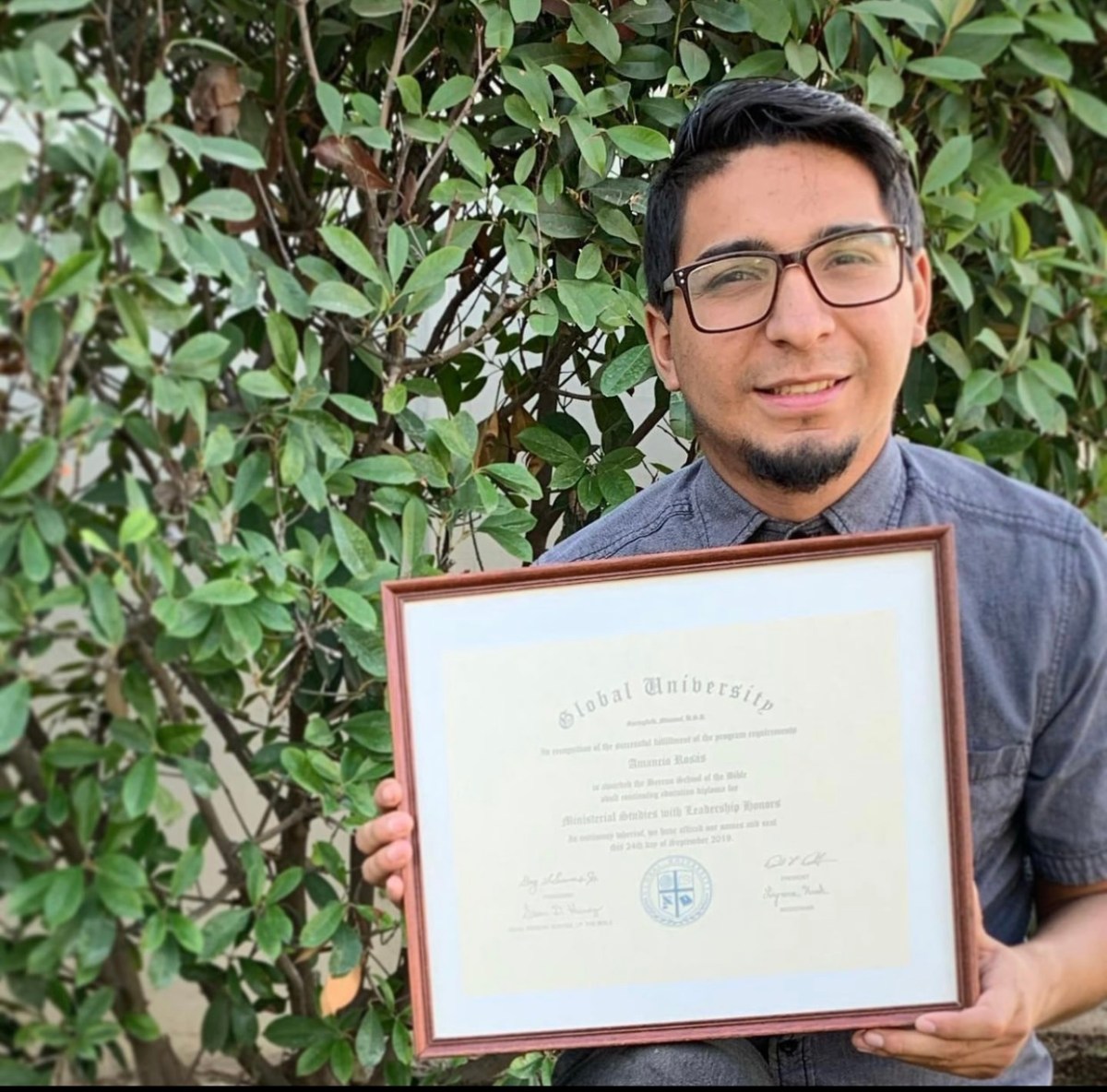
As you guys have noticed that I am an official graduate from Global University Berean School Of The Bible. I got my Ministerial Studies with Leadership Honors which provides more challenging ministry and training.

The Story Behind This:

I remember there were a lot of questions from people who thought that I should first pursue a degree before getting my credentials. While my church has split in 2015 and the transition was going on I was still a senior in high school wanting to join an internship that was unavailable. So I was recommended to do Berean School of the Bible to prepare myself towards my credentialing qualifications to be able to a minister. While I understand that it is not a degree but an opportunity to get the required courses to qualify there have been additional suggestions to get a degree first. I knew deep within my spirit that God wanted me to first pursue my credentials to accomplish the confirmation of the Call of God in my life. I did take their suggestion that college may be apart of my life in the future but I was solid on my goal to be able to accomplish my credentialing requirements.

I pushed and finally got my license to be a minister with the Assemblies of God in 2017 and now expecting to be ordained in 2020. I was on fire and passionate to get that goal accomplished. Then afterward I felt the call to finally pursue a degree which is where my next goal comes into play. I now attend Southeastern University on a mission to get my bachelor in Ministerial Leadership. I started online at first but then noticed that I am extroverted and really needed a community and be apart of a university. Which is how I found the extension site at The House of Modesto. I prayed and decided to transfer to the extension site for the mere purpose of being involved in a community of believers. After more than a year being apart of SEUNORCAL I have connected with a lot of people, being apart of their Student Leadership Body, and making memories with people who want to push me towards my calling to impact the Kingdom of God. I still have a year and a half more until I finish my degree but I am enjoying the moment and memories to be able to influence and build up those around me. I may not know the process that God has in your life.

My life as a young minister has been to completely surrender my life to Him. The more I keep going step after step with the direction that He has provided in my life the more opportunities will follow. While we tend to make things happen or force things to come we know at the end of the day it won’t work. We need to trust God with His plan no matter how confusing situations may be or how discouraging it may be in the “process moments” in your life. Trust God… Don’t forget this is a journey of a lifetime.

Categories
Educational Journey Luke and Acts

Module 1 Reading Log/Journal

When it comes to learning about the Gospel of Luke it’s important to learn about the historical background to get a better understanding of the context of the overall scripture. One of the things that got me interested regarding this reading was concerned with issues of social status and social stratification. When it comes to the Jewish world “classes” are commonly based on the status that you are labeled. On page 10 of the textbook, it gives out the highlights of the different people groups that are mentioned. Learning about the different groups will help us understand the culture and the interactions that Jesus faced in the midst of His ministry.
Learning about Jewish culture and their practice is important to relate with the culture and understand the background based on practices that they held. Jerusalem Temple is the lifeline of Jewish practice based on their obedience to the law. “Moreover, portraits of Jewish piety appear in references to prayer, worship, fasting, and expectant waiting and, indeed, to the representation of life oriented around the Jerusalem temple.” (14) We see Jesus being involved in the Temple and the synagogue when it comes to teaching the Torah and telling the audience the fulfillment that is taking place. It is important to see why there was resistance because the Jewish people valued the Temple and having Jesus state things about himself they consisted it as blasphemous.
I appreciate the statement that the context states about Luke’s narrative approaches. “For Luke, “narrative” is proclamation. Luke has in mind the use of history to preach, to set forth a persuasive, narrative interpretation of God’s work in Jesus.” (19) That point that Luke uses His narrative to preach and we conclusion principles based on a historical narrative is something I have seen people say it’s invalid to allow principles on Acts to be taken as foundational beliefs. The point of the look is persuasive interpreting God’s work in Jesus. I can conclude that his writing in the Book of Acts is seeing God’s work through the Apostles or through a Pentecostal perspective seeing God’s work by the Holy Spirit.

Green, Joel B.. The Theology of the Gospel of Luke (New Testament Theology) (p. 14,19). Cambridge University Press. Kindle Edition.

Categories
Educational Journey Luke and Acts

Luke/Acts Discussion Forum 1

Here is my response regarding my discussion forum! Hope you gain something out of it!

Categories
Educational Journey

Hymes, David. “Numbers 11: A Pentecostal Perspective.” Article Critique

If you want to read the full article Click Here.

Hymes, David. “Numbers 11: A Pentecostal Perspective.” Article Critique

Amancio Rosas

The following article is an introduction regarding three different types of modern Pentecostal readings when it came to academics. This Article provides perspectives of both agreements and disagreements about the different theological statements that these individuals stated in their investigation on Numbers 11. David Hymes’s works have been published which is found in the Asian Journal of Pentecostal Studies. I will be providing an article critique on his work based on my observations and my understanding of the difference of both his observations of other academic individuals who wrote their commentaries regarding this text.

Summary:

3 Modern Readings

The article provides 3 modern readings regarding this Scripture and the different perspectives that it’s been talked about through statements. The two themes found were the leadership office enablement and the Spirit empowerment that we both see in the passage. Wonsuk Ma and Roger Cotton both see the similarities about this phenomenon since there was prophesying which is meant to be a sign than just a one-time scenario. The second perspective is focused through a Non-Pentecostals lens regarding glossolalia. Gordon Wenham talks about utterances that connected it with the New Testament account of speaking in tongues. Nobutoshi Kiuchi supports Wenham’s observation by representing a theory about ecstatics tongues connecting as certain experiences that end up to be common throughout that time frame. John Levison is against this point of view and focused on the uniqueness of this experience as being just an experience but not a common one. The focus He highlights is the dreams and visions that are mentioned in Joel 2.

Rolf Knierim provides a few steps about the exegesis of Numbers 11 that doesn’t support Pentecostal observations. He states that this account must be read through as a biography of Moses. He also states the importance of the context of Scripture that should highlight the real meaning behind the passages. Isolation for him isn’t common practice in interpreting Scripture and rather focuses on the unity of explanations to examine the truths presented. Lastly, the scriptures shouldn’t be taken as a multi-meaning but just a simple theme that is united through the context of Scripture. By not focusing on the main point and emphasizing the different highlights hinders the purpose of the background to present the real meaning.

David Hymes Analysis of Numbers 11:

Hymes notices that there is isolation when it comes to passages from the Book of Numbers that we can gain understanding and connection from. The context comes from Numbers 10 and 12 to get insights into Moses and the realities it provides. The story of God’s provision for the Israelites regarding food is stated by their complaining. The plotline about the elders is to provide Moses’ desire not based on fulfillment but based on restoring relationship with God and His People.

The elders served to help carry the load with Moses so he won’t be stuck carrying the load alone. The empowerment factor is the purpose of the Pentecostal perspective, when reading without the perspective the meaning is different. The event wasn’t based on empowerment but courage and boldness for the situation. There was a transfer of power when it came to prayer so it is said that Moses transferred wisdom to the elders. Moses desired everyone to be prophets which is simply to emphasize the roles and not the event.

He then approves Moses’s centric interpretation that the focuses should be on Moses as the main character of the plot. When it comes to the giver of the gift that is focused by not just a prophet or Moses but God who provides the provision. The focus of Moses’s spirit is the aim focus when power and driven actions are being cultivated. Learning the periods and traditions helps bring the gaps by learning about the discontent of people.

The Pentecostal view is focused on the prophetic promise for believers, but the disagreement is laying flat by the isolation of the passage which is more than just prophetic but dealing with murmuring which may be focused on the plot. The main goal that is presented when viewing this account as an intercessory challenge towards those than having people desire to be prophets.

My Observations:

Moses’s Desire | God is the provider of gifts

My suggestion when it comes to Moses’ desire for everyone to be prophets is the forthcoming of the Holy Spirit. Throughout the Old Testament, we see glimpses of the Spirit’s power when it came to empowering those for the task that was given. I do not believe the narrative of Moses being the only individual that shows the power of the Spirit if other people were able to prophesy as well which to me personally eliminates the argument of Moses being the only specific person that can hear from God. God needs to be viewed as the provider of the gift of prophecy to those He wants to receive it; Unless the other prophets were demonically inspired which isn’t the case we can conclude that this isn’t a Moses narrative versus other themes and emphasis of the biblical accounts. The purpose of examining Scripture within the context is looking at other information around the environment that we can conclude based on our perspective and not just a focus. If we do not have our eyes open on additional details, then we will lose other insights that can guide us towards interpretations that can bring unity instead of causing division.

Empowerment | Eldership | Wisdom

When it comes to the eldership moment when Moses gathered the 70 elders towards the tabernacle. The LORD spoke to Moses and took the Spirit and gave it to the 70 elders. This shows personally that God can give individuals in this case the Spirit to whomever He wants. While we see that this didn’t happen again it shows that God is the one that prompts the Spiritual Gifts to be activated. Eldad and Medad were prophesying because of the Spirit’s influence which rested on them which concludes Moses’s objection to His desire. Was this moment just an office type of approval that because the elders had the Spirit resting on them or could it be for empowerment? I agree that both could be simplified by the task of an elder which it would be wise for the LORD for the empowerment to be granted while the Spirit has rested on them which caused them to prophesy.

God’s Spokesman | Exchange | Intercession vs Spirit Baptism

It makes sense that throughout the generations He has called specific individuals to be the one’s that have spoken on His behalf. This was the function of the office of a prophet or those operating in this gift. There is the concept of anointing where people can lay hands to distribute some type of gift or power through the inspiration of the Holy Spirit in this case the Spirit of God. Impartations were common for the purpose of empowerment and exchange meant to pass down the anointing to make an impact on the next task that God has for the individuals. We have Moses and Joshua, Elijah and Elisha, and others throughout the Old Testament who supported this type of exchange. Now the opinion about whether this was intercession or Spirit Baptism. This conclusion can be confused by the terminology of “They did not do this again” I wouldn’t come to the conclusion of this being an intercession because intercession is focused on continuing prayer. While Spirit Baptism is an inner working of the individual allowing sanctification, justification, and spirit-filled living to produce. I do believe that after the experience they received some type of empowerment which provides more awareness of the Spirit.

Conclusion:

I enjoy theological perspectives based on individuals’ backgrounds and their view of Scripture. This article provided the challenge of Pentecostal and non-Pentecostal views. I did agree on certain points of the articles and some I do not agree with and believe there needs to be a more overall examination. I provided my insights regarding the desire Moses had and how God is the ultimate gift giver. I challenged the battle between empowerment and election and how I see both being a part of the equation and the importance of service. Then stated the last point about God using people by passing along the exchange of anointing and the purposeful section of Spirit Baptism as an ongoing awareness of the Spirits involvement in the Old Testament. This article challenged my views on how to explain scripture, and learn to be balanced and understand both approaches and make a clear assessment.

Categories
Educational Journey Personal Journey Uncategorized

Your Testimony Has Power

Audio Version Of This Post

I remember the words I was thinking about regarding testimonies and how valuable they are. My testimony is a treasure because of the rich value it provides in my life and the effects it can have to provide hope for others in their walks with Christ.

I just finished a Discussion Forum regarding storytelling and the importance of how the biblical author used it to provide theology and insights that we can gain. Our testimonies can be the confirmation of the theology of Scripture which provides validation and standard of our basis of faith. No one can discredit your testimony because it is your experience. But I noticed within our church culture we focus too much on what people have been through in the past and not on the involvement of what God is doing now. Here is what I wrote regarding Testimonies and how the church can teach through storytelling.

The Church's most common way to teach through a story is through our testimony, but sadly a lot of us stop on that segment of storytelling and need to retell and redevelop stories of how God is being involved in our lives. Testimonies are great for personal witness about how we made a commitment to Christ and our situations connected with that but learning through our own struggles and situations we can relate through our interaction with Scripture. God is setting up stories for us to tell those around us.
The Holy Spirit does a good job of convicting us when we interact with Scripture to produce a change in our lives which concludes witnessing of a story that can be told through the confirmation of Scripture.
- Amancio Rosas

When disciplining new believers in the faith I would allow them to go through a program that includes a segment on writing their testimonies. Here are the following three guidelines that I explain and teach:

1.) Your Testimony Brings Remembrance

It is a human habit to forget, our minds are designed to process things in our lives to remember the valuable moments and forgetting moments that are deep inside in the backburner. It is easy to forget what God has done in our lives due to our forgetfulness. Our Testimony helps us remember what we have been through and writing an account will keep us humbled because it was Jesus who helped us in our lives. This keeps us from being critical towards others and their walk with Christ including when they are first starting. The Holy Spirit plays a part to help us remember things in our lives. While Jesus spoke to His disciples about how the Holy Spirit will bring in remembrance everything that was taught and spoken. We can be in full confidence that He is still active in that role today when it comes to what Jesus has done for us and what we have learned from Him.

But the Advocate, the Holy Spirit, whom the Father will send in my name, will teach you all things and will remind you of everything I have said to you.

John 14:26

2.) Your Testimony Has Power

Storytelling is common throughout Scripture since a good amount is narrative accounts. We can learn theology based on the narrative account since they paint a picture in our minds about the complexities of different outcomes. Just like we take serious about context, it is the principle and application which should confirm the seriousness of context. Revelation 12; Depending on your views on prophetic writings, it has a mixture of different literary techniques but the main purpose is to take this verse and provide the common principle when trying to confirm the purpose of testimony.

They triumphed over him

    by the blood of the Lamb

    and by the word of their testimony;

they did not love their lives so much

    as to shrink from death.

Revelation 12:11

While the context is about the war that is going down with the “Women” and Michael, it is obvious and makes sense that the blood of the Lamb in our lives today washes away our sin. When we are reminded about what Jesus has done in our lives and His bloody sacrifice we are reminded of the power of the blood of the lamb. The word of their testimony is where I want to emphasize the importance of your identity. Your testimony has the power to not only to remind but to overcome. This serves to help others overcome their struggles through Jesus because of our witness and praying over them based on the power of Christ through the sacrifice that we provided for the forgiveness of our sins and the testimony of salvation that keeps our foundation firm during life.

3.) Your Testimony Is Ongoing

Your life doesn’t end when you accept Christ in your life. Not sure why so many people believe that and then do not live transformational lives, Seeing God being involved, and slowly go back to their old life. When we are reminded and know that is power then we can have continued to allow God to shape more stories that will benefit those around us. We must allow God to use us in the good times and difficulties to provide hope for those around us.